She Came Back: Geri's Overwintering Story and the Deck That Bloomed Around Her
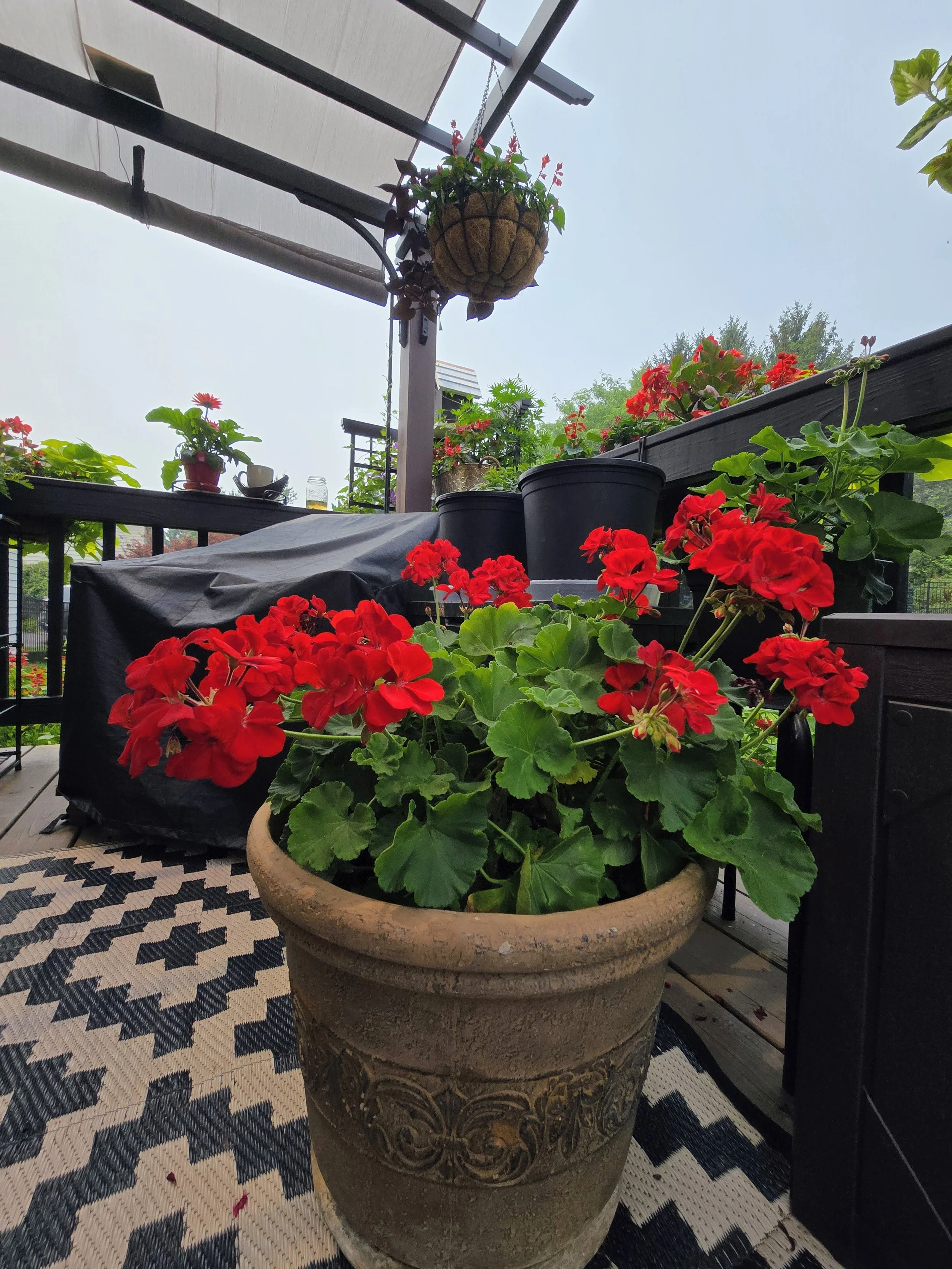
Geri in all of her glory
I have a confession to make.
Yes, I name my plants. It's a whole thing around here. Geri's no exception.
Every fall, I bring a geranium inside. I tuck her into the basement, talk to her occasionally, water her just enough, and hope for the best. And every spring, I hold my breath when I carry her back out into the light.
This year, Geri didn't just survive. She came back swinging.
If you've been following Blooms & Dwell for a while, you already know about Geri. She's my overwintered zonal geranium — a plant I've coaxed through a Pennsylvania winter in my basement under grow lights, refusing to let go of her because she represents something bigger than a geranium. She represents the belief that the things we nurture and protect through the hard seasons come back stronger on the other side.
And come back she did.
This deck didn't always look like this. When we first moved in, it was just a plain wood deck with an empty railing — not a hanging basket or a hummingbird in sight. Everything you're about to see, we built up piece by piece.
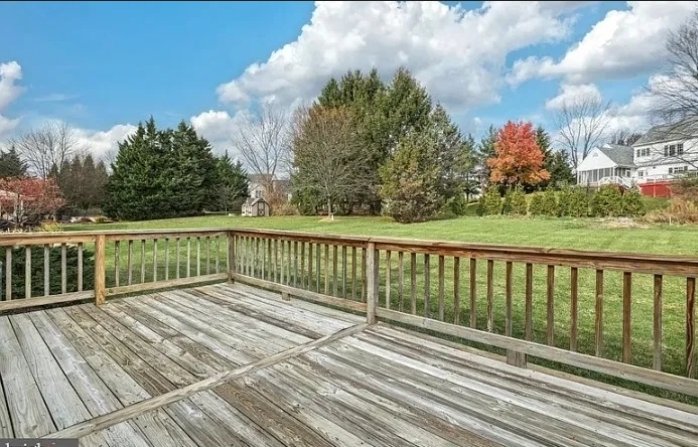
The deck we started with.
We made a few changes last year and Geri was there to supervise. She looked good last year too but this year she is thriving!
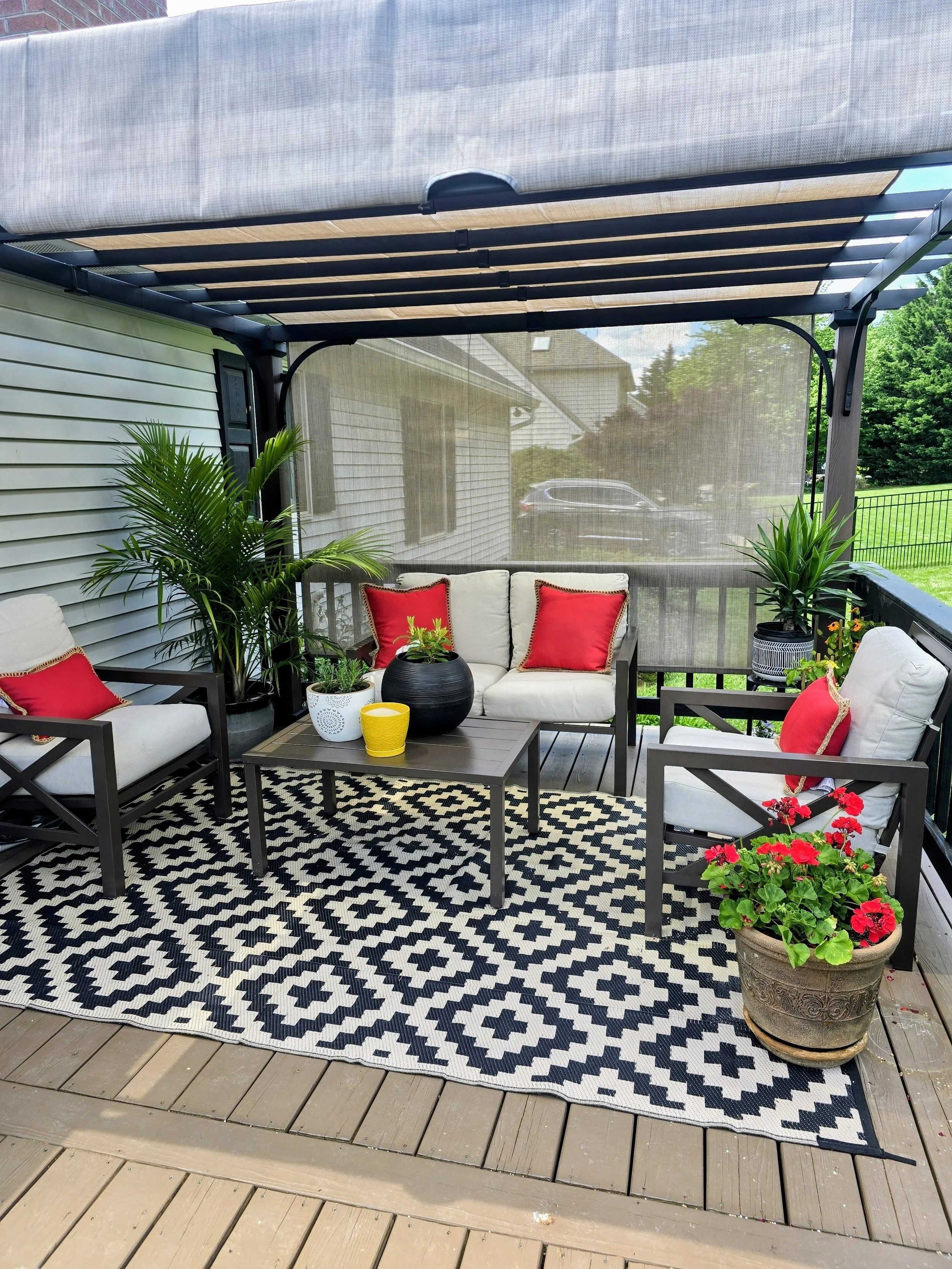
Geri making the deck look better in 2025.
THE OVERWINTERING STORY
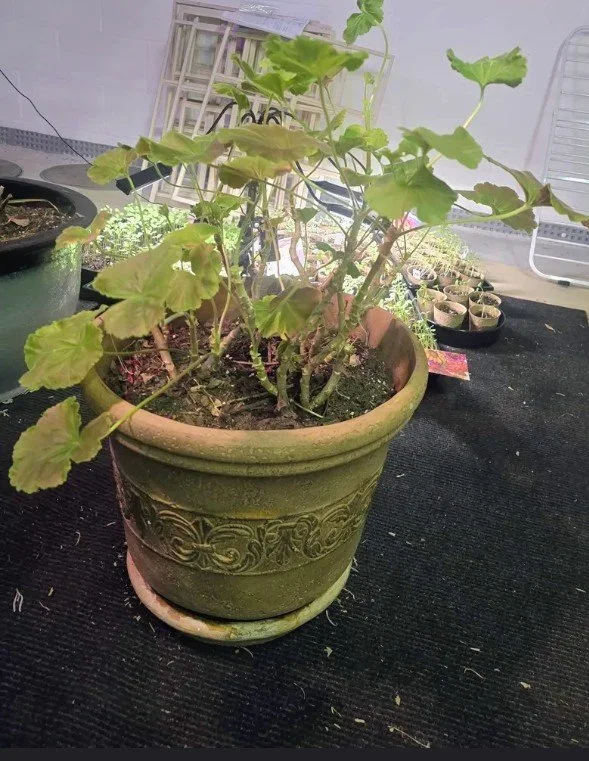
Geri was looking bad- wasn’t sure she would make it through the winter.
Overwintering geraniums isn't complicated, but it does require commitment. In the fall, before the first frost, I cut Geri back by about a third, brought her inside, and set her up under my basement grow lights on a 12-hour timer. I watered her sparingly — just enough to keep her from completely drying out — and mostly left her alone.
By midwinter, she was a mess. Leggy. Pale. Reaching for light she wasn't quite getting, sharing a grow light with a Majesty Palm and a yucca, everybody competing for the same pink glow. You know that uncomfortable feeling when you look at a plant and think — is she going to make it? That was February with Geri.
So I moved the light closer. And then I gave her a hard cut.
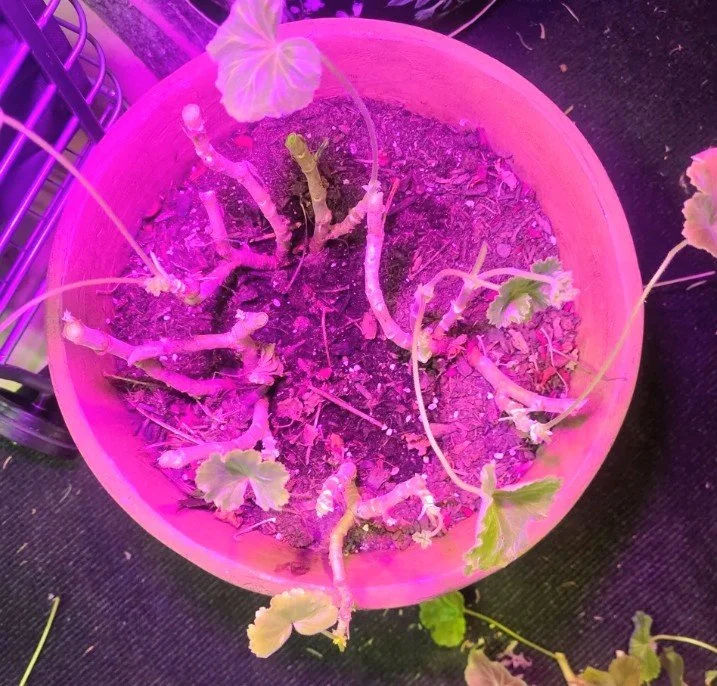
Doubting her survival at this point!
Down to just a few inches of woody stem. It looked brutal. It felt brutal. But geraniums are tougher than they look, and sometimes the kindest thing you can do for a struggling plant is give her a fresh start.
I kept the faith. And Geri kept hers
Within weeks, tiny green nubs began pushing out from every cut stem. New growth. New energy. She was rebuilding herself from the inside out
There's something quietly satisfying about watching a plant come back from nothing. No drama. No fanfare. Just one small green leaf at a time, until one day you look down and she's full again.
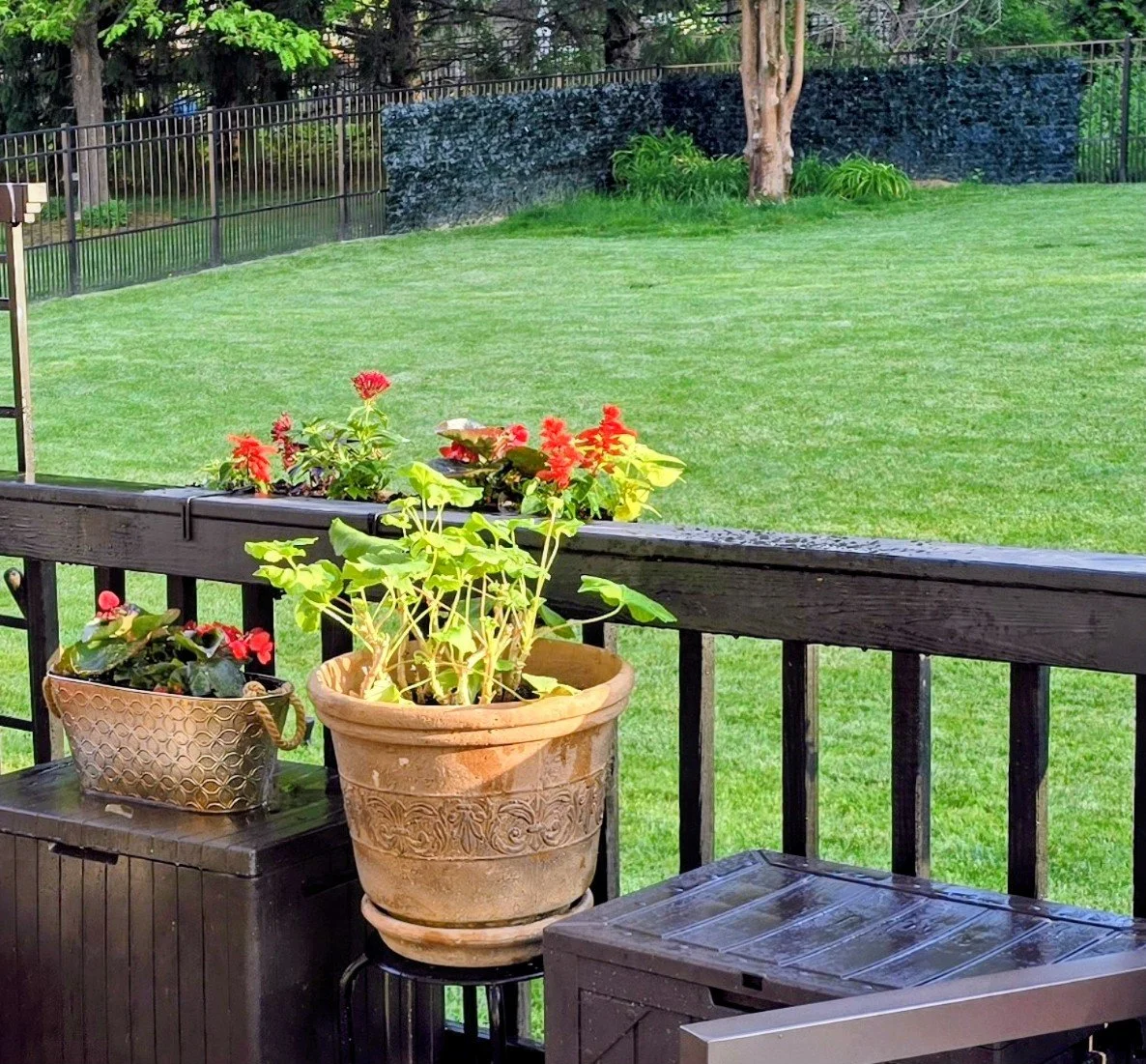
Geri filling out and getting some color back.
When I carried her back outside this June and set her in her terracotta pot on the north-facing deck, something happened almost immediately. The color deepened. The stems straightened. And then, almost overnight, the blooms came — bold, saturated red, opening up like she'd been saving every bit of energy all winter just for this moment.
She was showing off. And she had every right to.
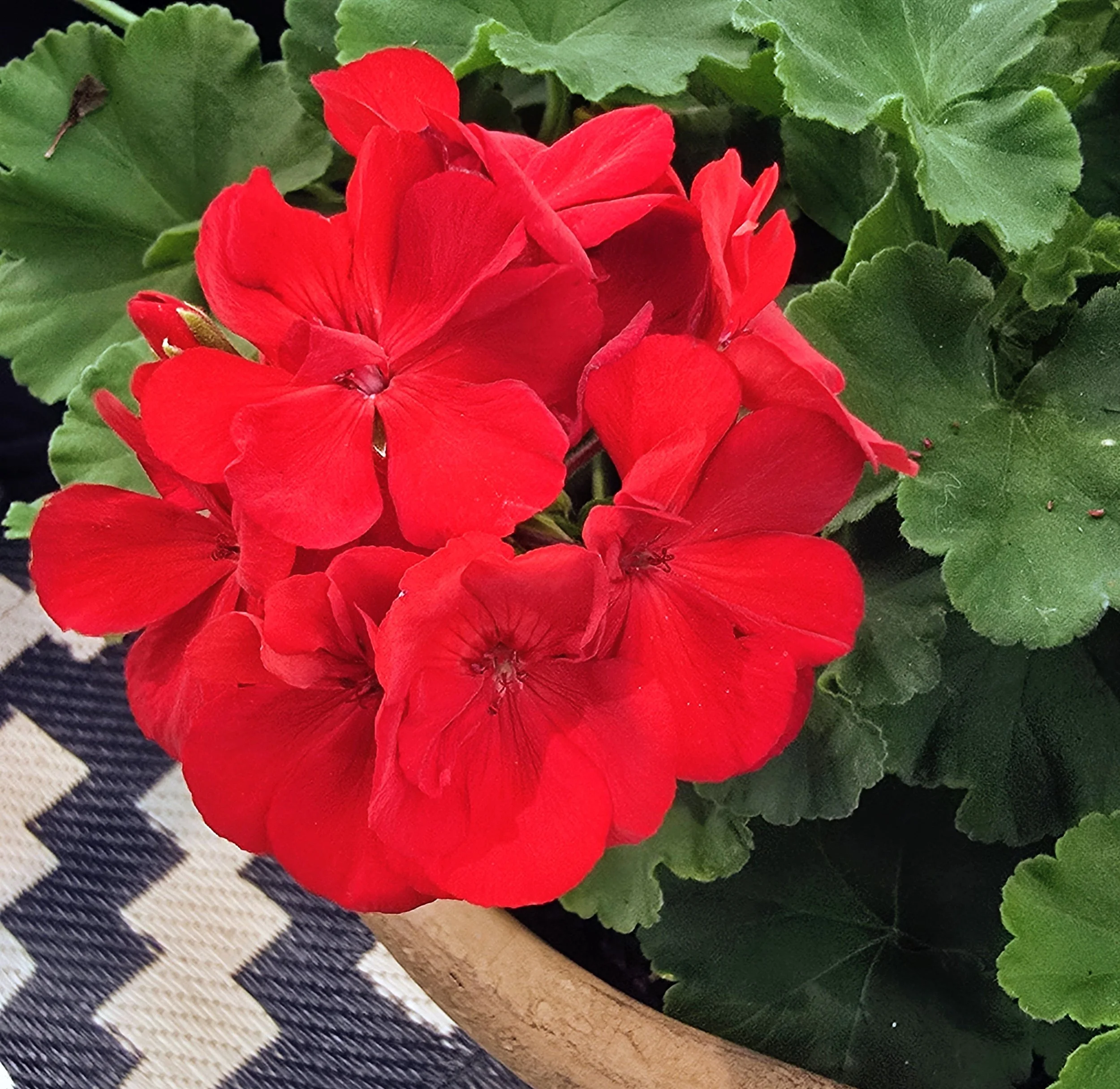
Geri is blooming!
And blooming a lot!
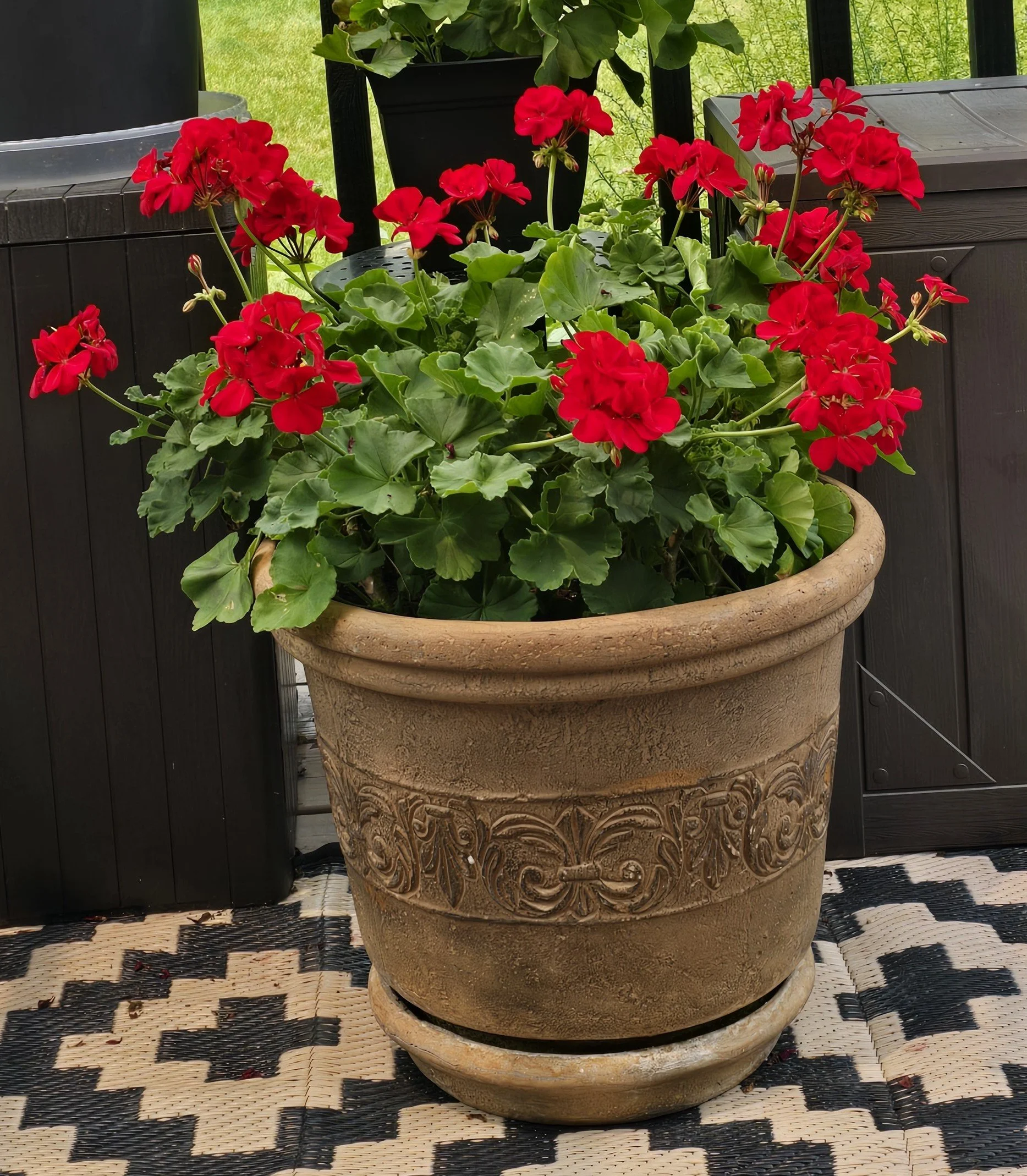
Beautiful Geri in all her glory.
---
THE DECK THAT GREW UP AROUND HER
Here's the thing about the back deck: it faces north and had absolutely no plant life around it.
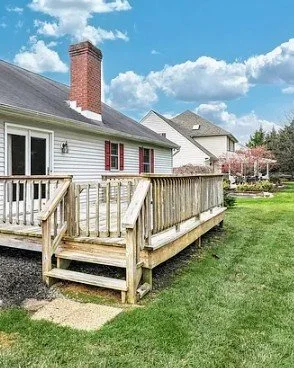
This is what we had to work with.
If you garden, you know what that means. No direct southern sun. Limited light. A challenge.
When I started dreaming about this space, I almost let that north-facing reality talk me out of going big with it. But then I thought — what do hummingbirds love? Movement. Color. Feeders. Flowers. None of that requires full southern sun.
So I leaned in.
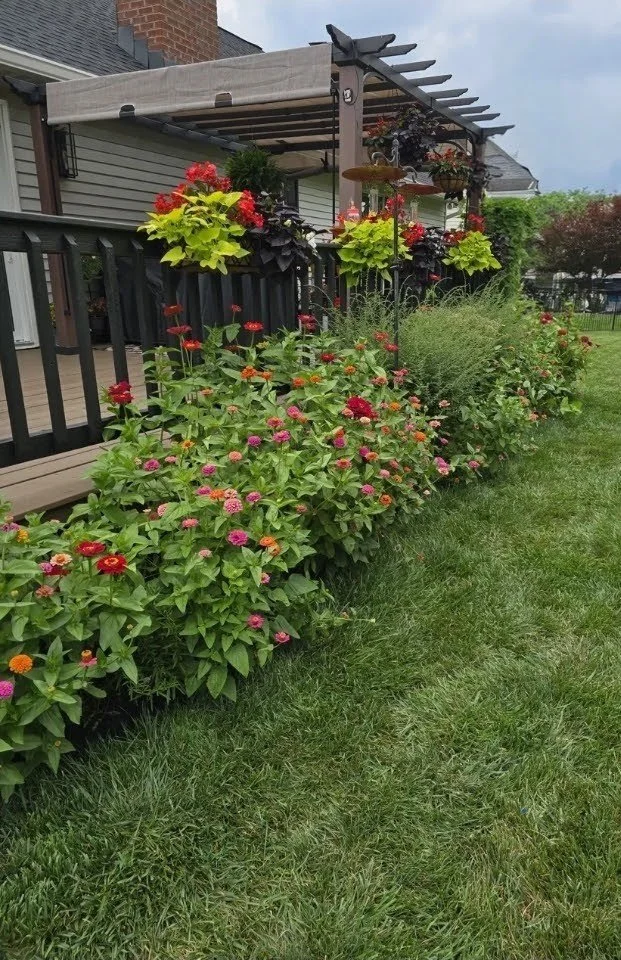
This is where I finished.
The wood repair and stain started the project, then the pergola went up, and it became the backbone of everything. From its beams hang two large coconut coir hanging baskets — each one planted with red salvia, deep purple sweet potato vine, and a lush Boston fern spilling over the edges. The color combination is intentional: deep red, dark purple, and cascading green. It's dramatic. It's cottage. It's exactly what I wanted.
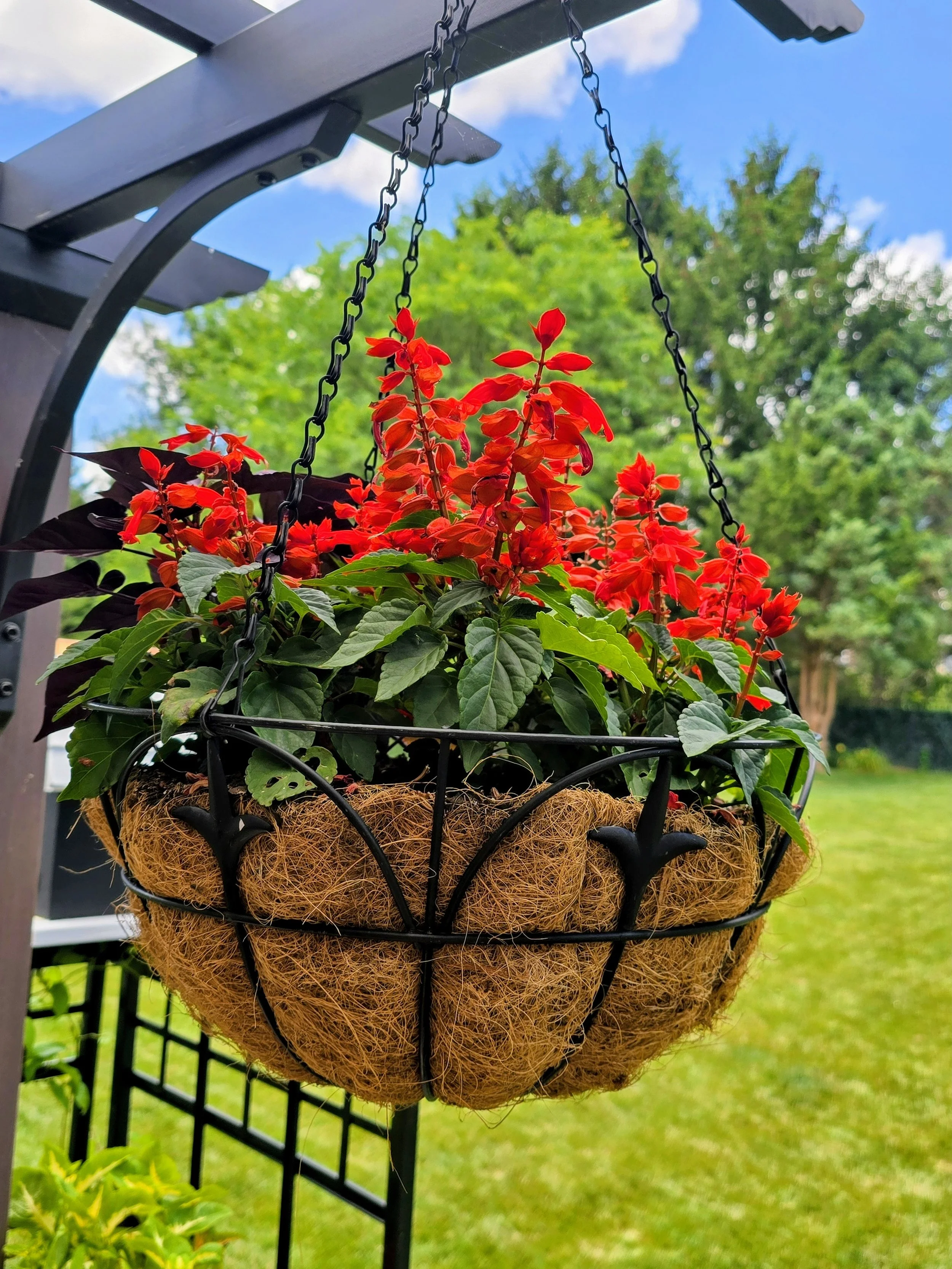
One of two identical hanging baskets.
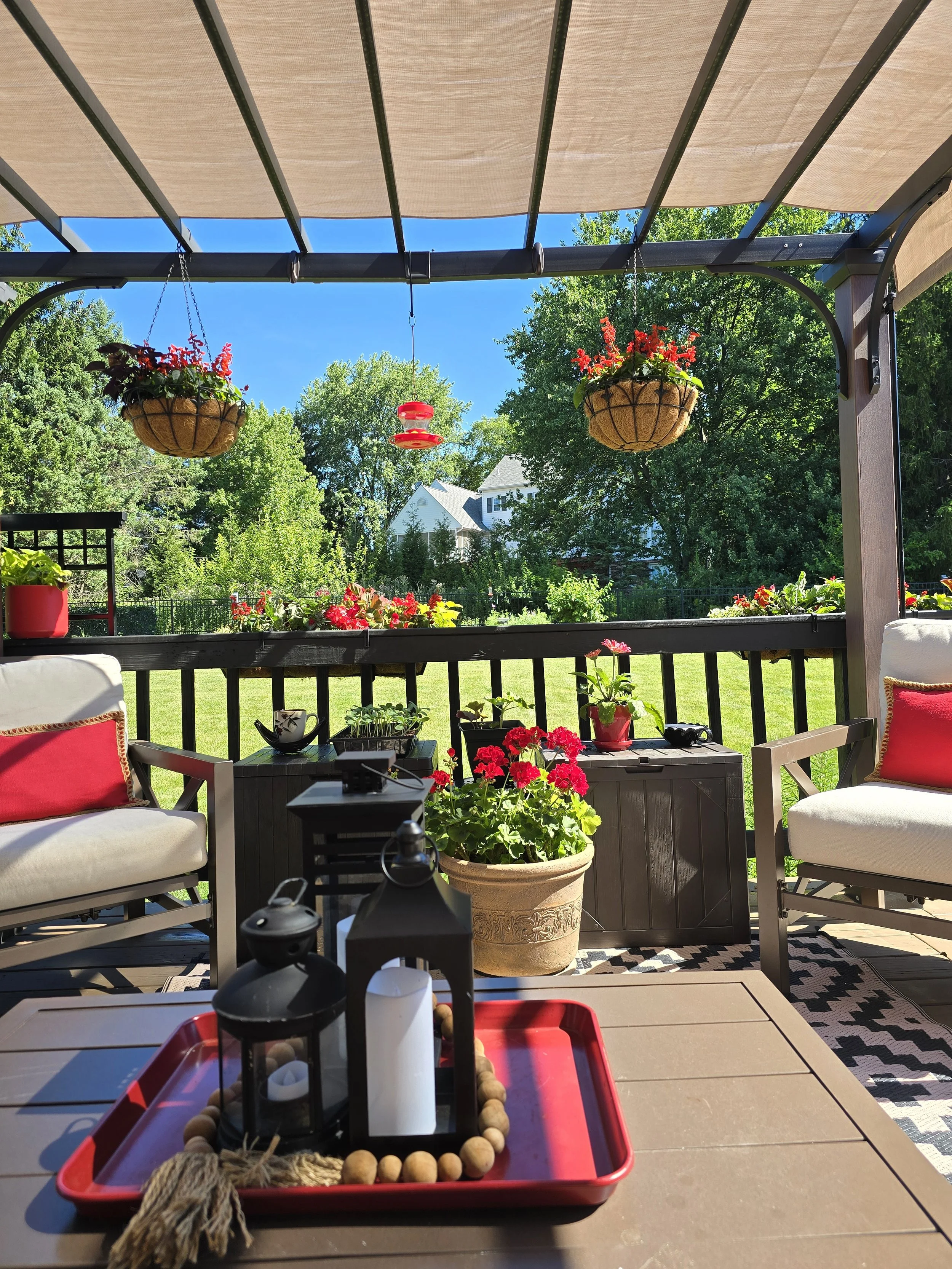
Hanging baskets with hummingbird feeder flanking the north side of the deck.
The rail planters along the north deck railing tell a similar story. Red begonias, chartreuse sweet potato vine, purple sweet potato vine, white million bells trailing over the edges. The same palette, carried through, consistent and lush.
And right in the center of it all — hanging from the pergola where every hummingbird can find it — is the feeder. Filled with homemade 1:4 sugar water, which I discovered this spring works far better than any commercial nectar. The hummingbirds found it the very first night I put it out. They haven't left since.
I will say — I can't take all the credit for the bird activity around here. Hubby claims the whole setup is overkill. Hubby also refreshes the birdbath every single day.
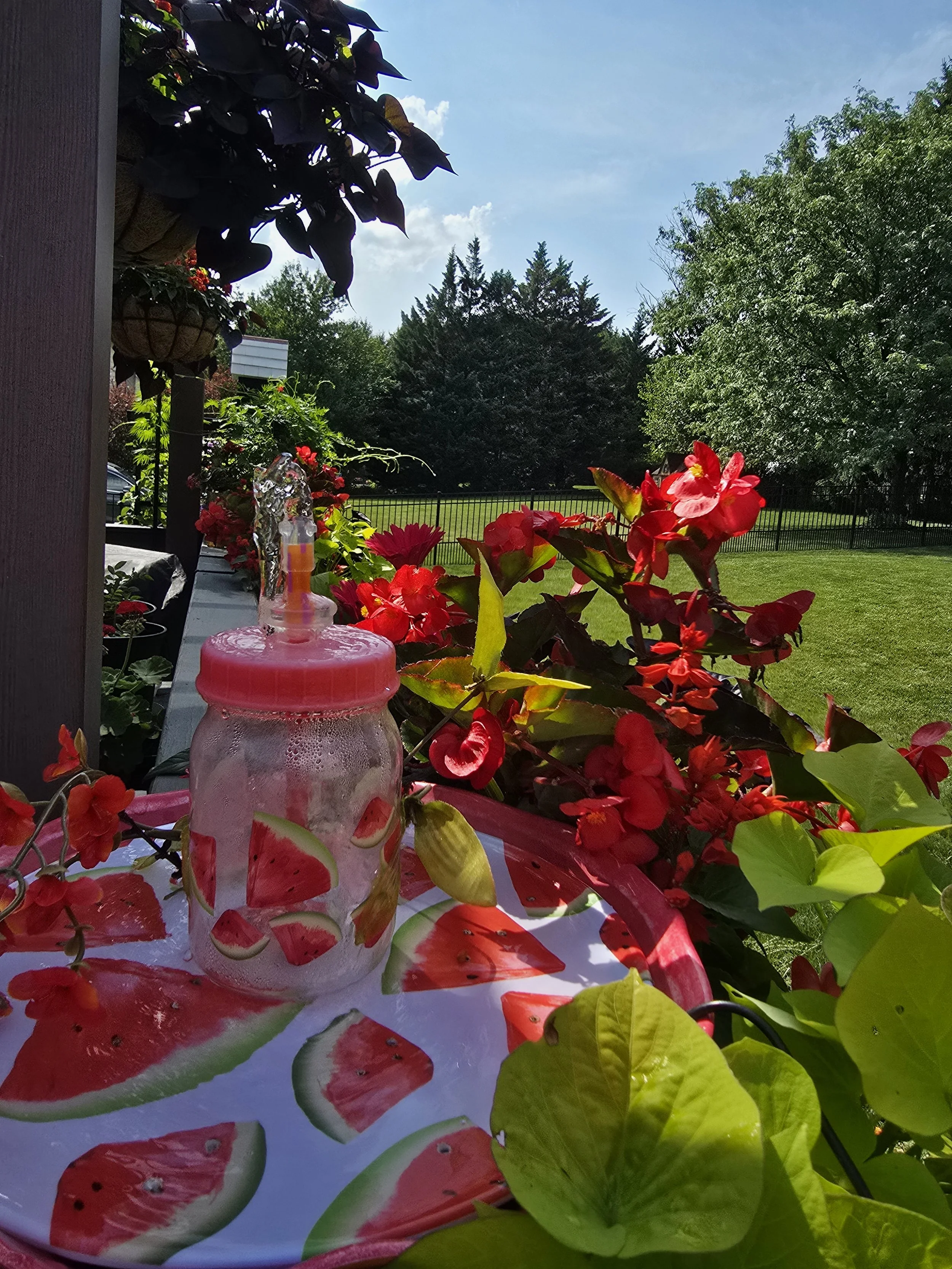
Hummingbird bath setting at the edge of the rail planters.
The bird bath itself was a cheap thrift-store bowl, Dollar Tree watermelon themed plate and plastic jar, with a bubbler kit added on — more on exactly how I put that together on an upcoming blog post.
Geri sits at the center of the deck in her terracotta pot, surrounded by all of it. The queen of the space. The plant that started it all.
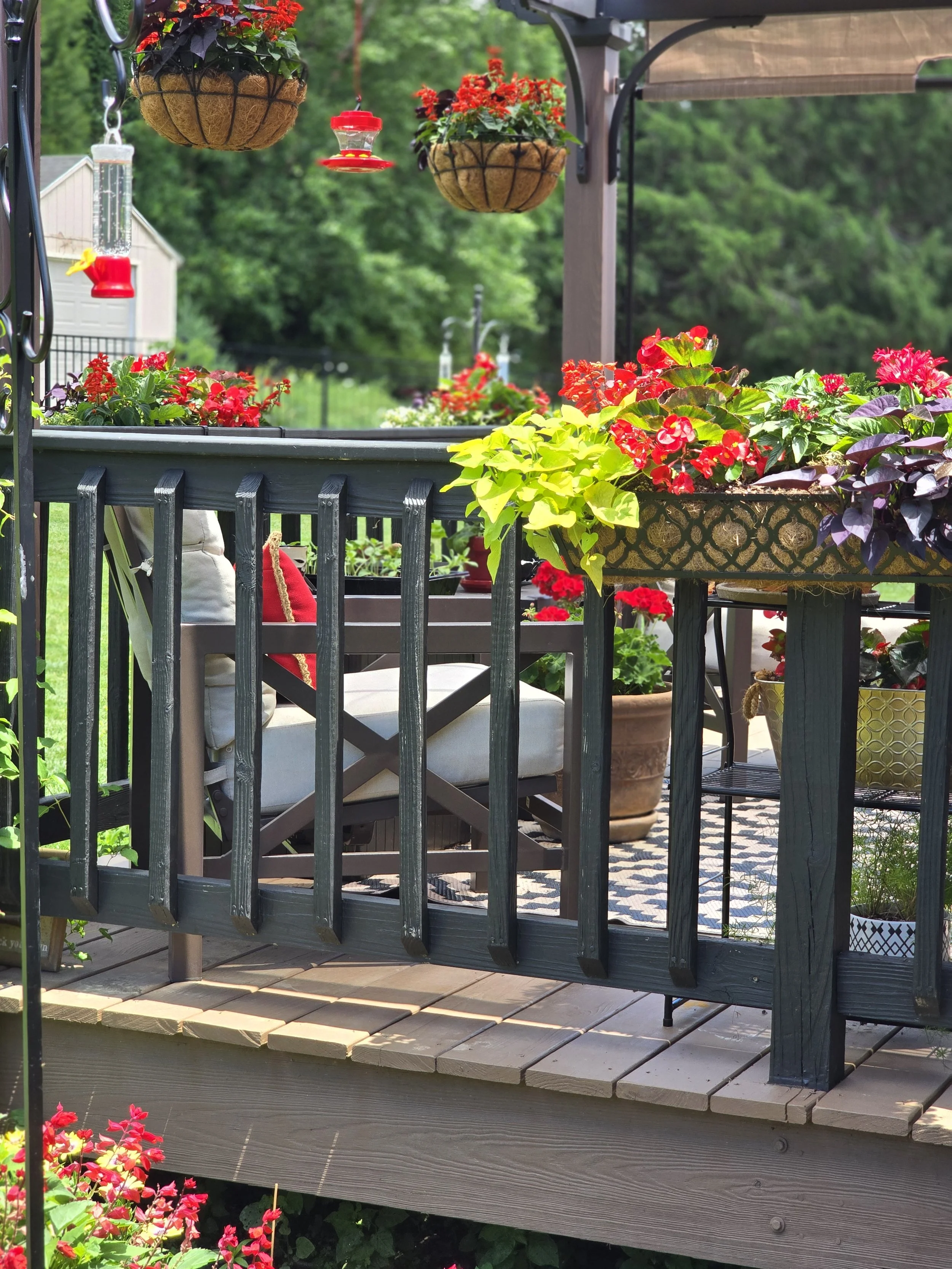
Geri through the rails.
---
WHAT'S GROWING ON THE NORTH DECK
For anyone who wants to recreate this kind of lush container garden on a north-facing deck, here's what's working for me in Zone 6b Pennsylvania:
HANGING BASKETS (pergola):
- Red salvia — hummingbird magnet, tolerates lower light beautifully
- Purple sweet potato vine — dramatic color, vigorous grower
- Boston fern — lush and full, loves the humidity
RAIL PLANTERS:
- Red begonias — reliable color all season in partial shade
- Chartreuse sweet potato vine — brightens any shady space
- Purple sweet potato vine — adds that dark, dramatic color
- White million bells — delicate trailing white flowers
- Red pentas — another hummingbird favorite
CONTAINER SPECIMENS:
- Geri the geranium — overwintered, spectacular
- Yucca — bold architectural contrast
FEEDERS:
- Homemade 1:4 sugar water (1 cup white sugar to 4 cups water, boiled and cooled)
- No red dye needed — the red feeder does the job
---
THE LESSON GERI TAUGHT ME
Gardening has a way of mirroring life back at you if you let it.
Geri spent a whole winter in a basement, not blooming, not growing much, just existing. Holding on. And then the season changed, and she was ready. Fuller than before. More beautiful than I remembered.
I think about that sometimes when a season of life feels dark and dormant. The holding-on matters. The quiet tending matters. The bloom comes.
That's the garden philosophy behind Blooms & Dwell. Southern roots, blooming in the north. Even when the deck faces the wrong direction. Even when the winters are long. Even when you're not sure the geranium is going to make it.
She always makes it.
--
Bloom & Dwell is a garden-forward outdoor living blog by Regina, written from her York, Pennsylvania garden with one eye always on Alabama.