How I Designed My Front Porch Planters Around a Wreath
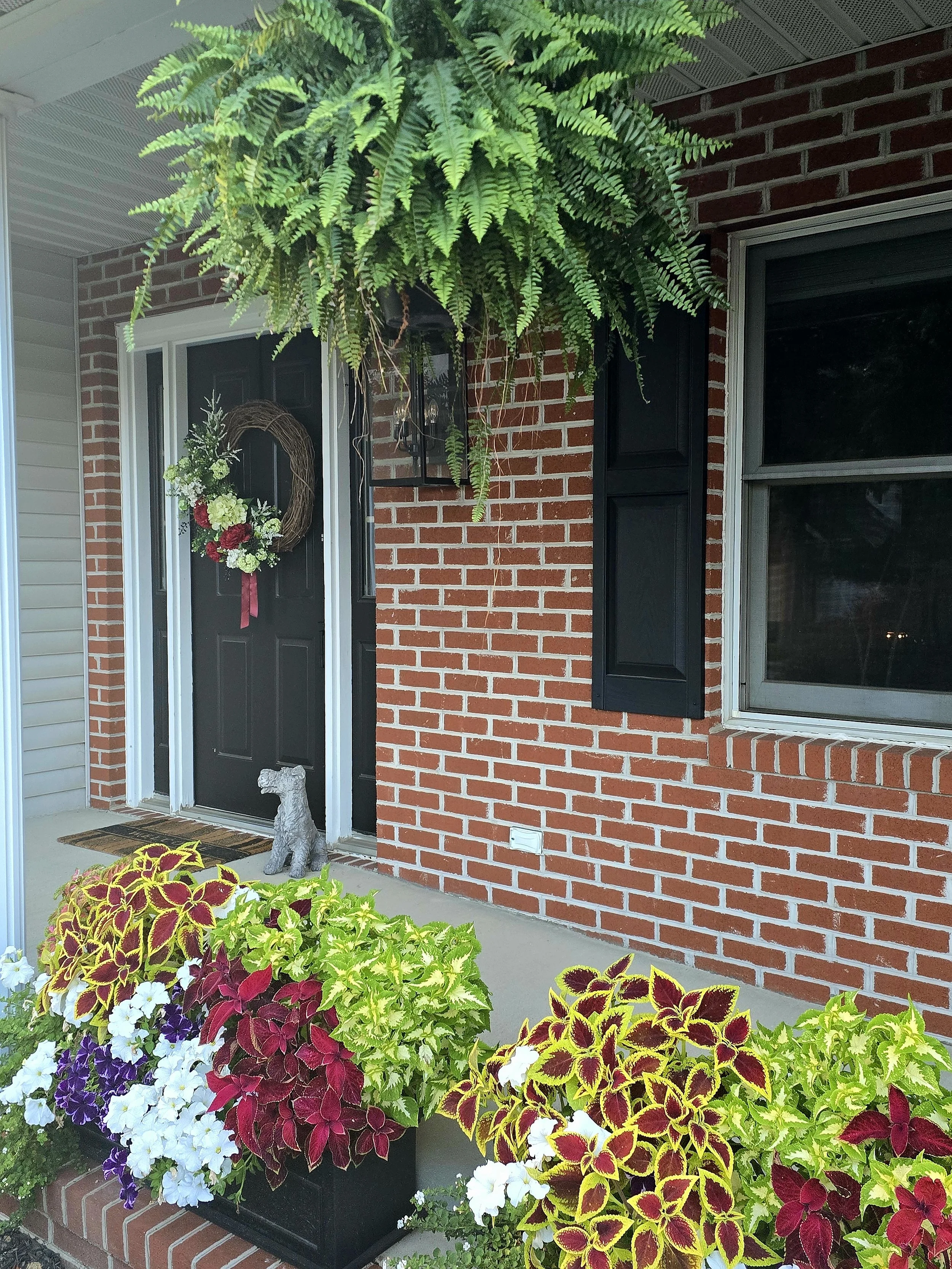
UPDATED: Photo taken July 20, 2026. Showing the full colors!
What if the secret to a perfectly coordinated front porch wasn't a design degree or an unlimited budget — but simply starting with a wreath?
I'll be honest with you. When I moved from Alabama to York, Pennsylvania a couple of years ago, the front of this house felt nothing like home. Beautiful bones — red brick, white columns, a covered porch — but no personality. No color. No story. The foundation beds were an overgrown mess, however, that's another story to tell. This spring, I decided to change all of that, and it started with five empty black planters and a very clear vision in my head.
The vision? Make everything talk to each other. The wreath, the planters, the hanging ferns, the foundation beds below — one cohesive conversation from the street. And I'm so happy to say it worked.

It Started with the Wreath
My friend and I made the wreath together — a large grapevine base with deep crimson silk peonies, chartreuse and white hydrangeas, dark berries, and a trailing burgundy satin ribbon. The moment we hung it on that black door I knew exactly what the rest of the porch needed to look like. Deep red. White. Chartreuse. Dark drama.
That wreath became my color palette for everything else. Every plant decision I made for the window boxes came back to that same question: does this talk to the wreath?
The Planters Formula
I have five planters running across the brick face of my porch — all identical sitting right on the brick ledge across from the windows. The goal was to fill all five identically so the eye travels smoothly across the whole front of the house rather than stopping and starting at each individual box.
Before I touch a single plant I always prep the soil. I dumped about half the old potting mix from last year, then refilled each box with a blend of fresh garden soil, Black Cow aged manure, peat moss, and most importantly — a tablespoon of Osmocote slow-release fertilizer mixed right in. That Osmocote is my secret weapon for container gardening. It quietly feeds the plants every time they get watered, all season long, without me having to remember anything.
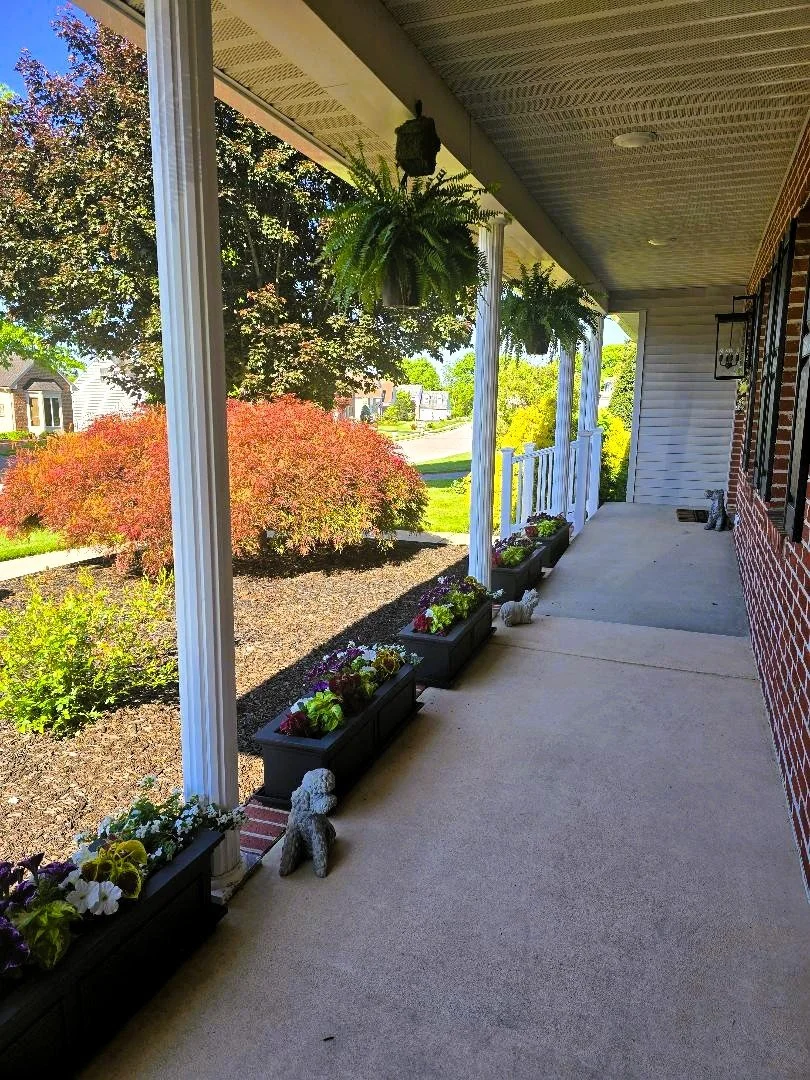
🌺 My Walkway Planters Plant Recipe — Each of Five Boxes
🖤
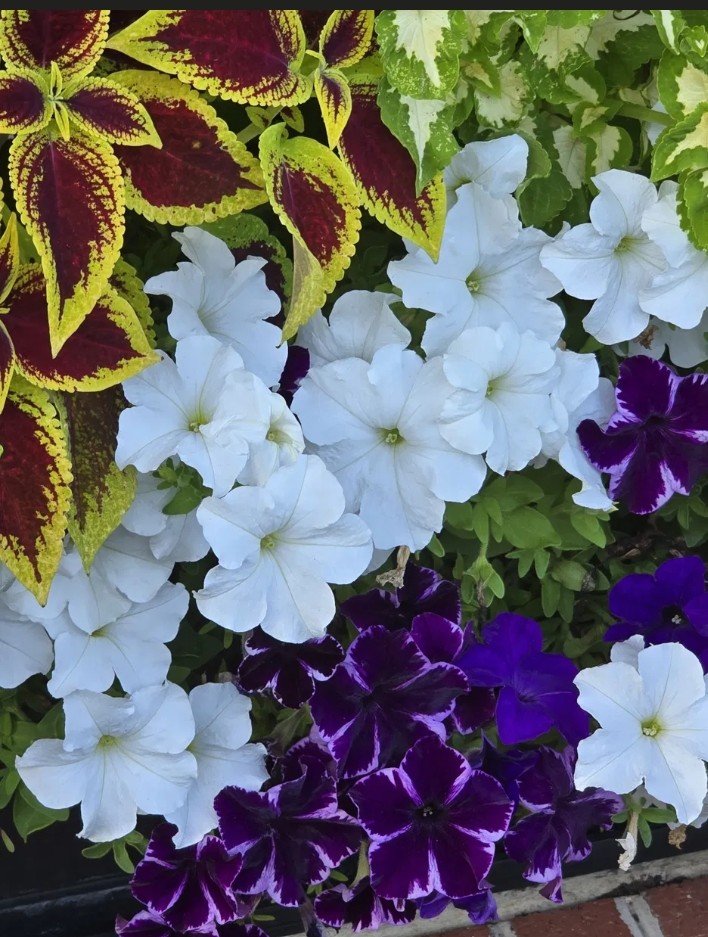
Deep Velvety Purple Petunia × 1
Back center — the dramatic thriller. Deep purple so dark it's almost black. Against red brick it looks absolutely stunning.
🌿
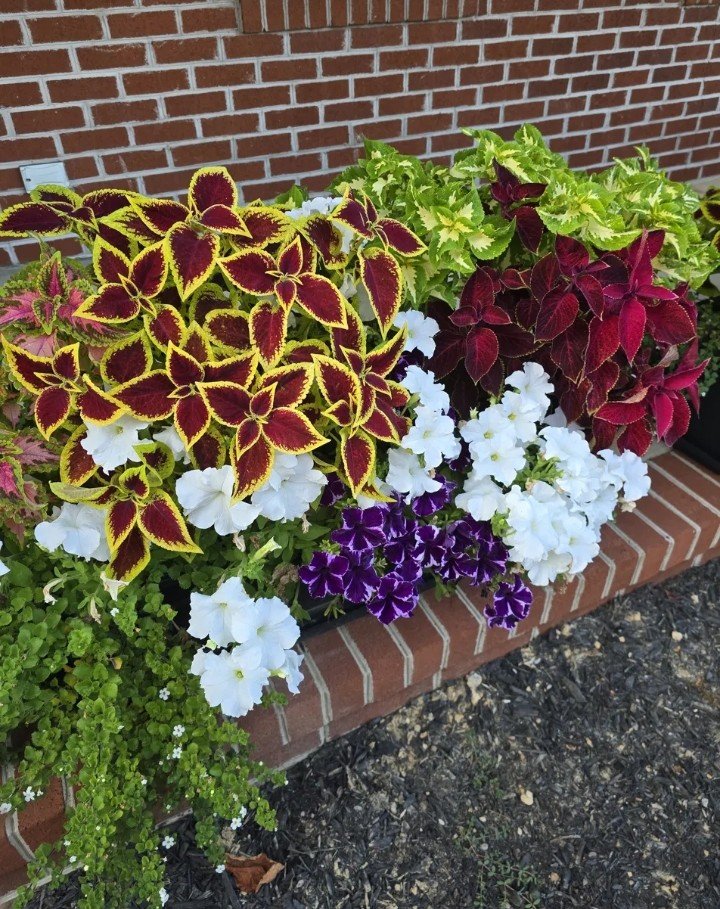
Mixed Coleus × 2-3
Mid layer — I used a mix of dark burgundy, copper-orange, and chartreuse-lime varieties. The variety creates depth and movement in each box.
🌸
White Petunia × 2
Mid layer — a bright pop of white that ties directly to the white hydrangeas in the wreath and the white porch columns.
🤍
White Bacopa × 1
Front spiller — tiny delicate white flowers on trailing stems that cascade beautifully over the black box edge. More airy and delicate than a large petunia.
The Layered Look — Ferns Above, Boxes Below
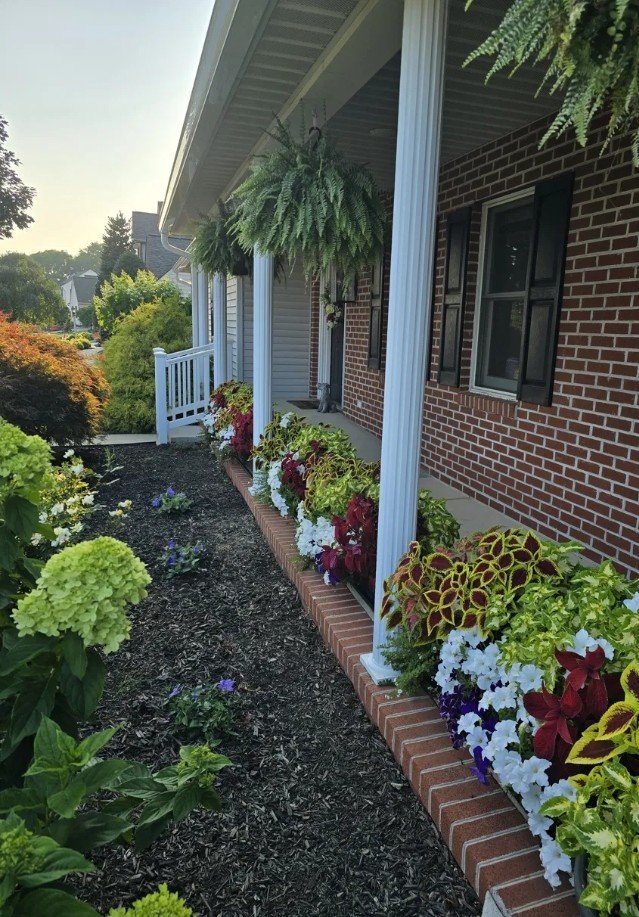
Here is the detail I am most proud of and nobody asked me to do it — I hung three lush Boston ferns in hanging baskets directly above the planters. Not in the boxes. Above them. The result is a layered cascade effect: ferns draping down from above, planters bursting with color in the middle, and the unfinished foundation beds below. Purple dahlias and red salvia will be showing up in that bed soon. Three distinct tiers against that red brick wall.
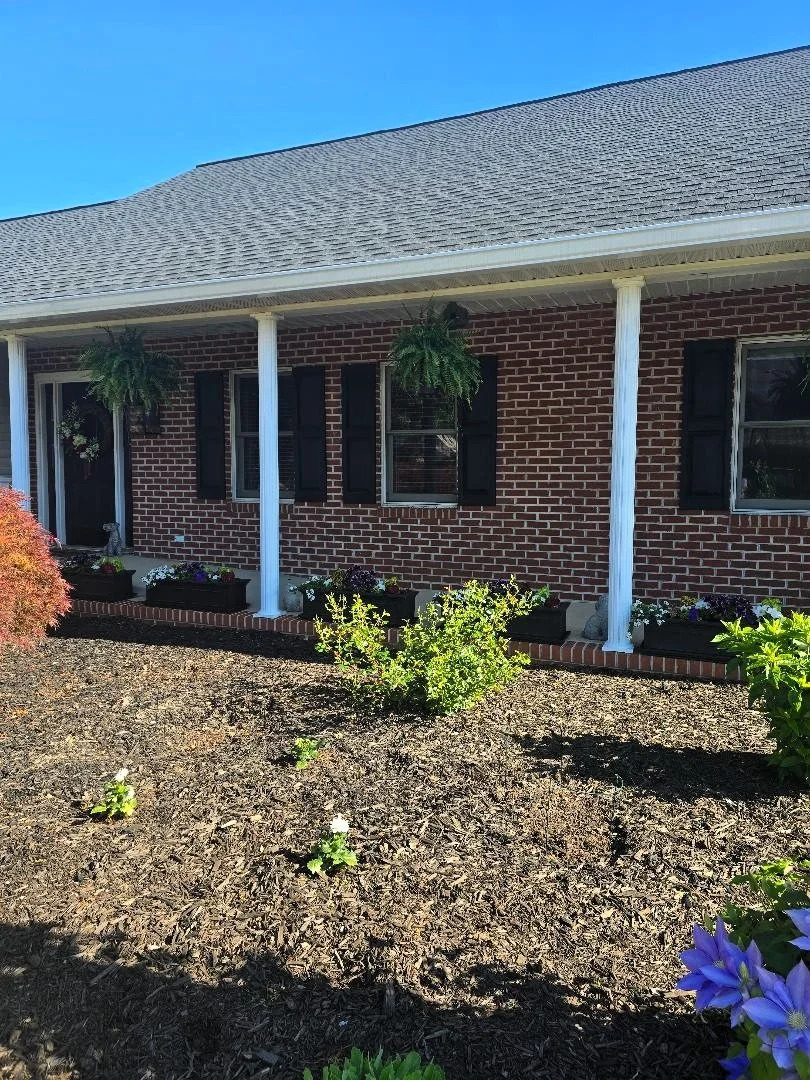
Standing at the street looking in, the effect is exactly what I was hoping for — lush, intentional, and completely cohesive. The deep greens of the ferns echo the dark coleus. The white flowers tie to the white columns. The dark purples pull from the wreath. Everything is talking to everything else.
Pro Tip
When planting identical planters across a large facade, lay all your plants out on a table first and group them by color. Then build each planter in the same order — thriller in back, fillers in middle, spiller in front. Working systematically means all five planters genuinely look the same when you step back.
Soil Prep — Don't Skip This Step
Container gardening lives and dies by soil prep. Planters dry out faster than garden beds, they have limited root space, and they rely entirely on you for nutrients since there is no surrounding soil ecosystem to draw from. Here is exactly what I mixed into each box before planting:
About half fresh garden soil mixed with Black Cow aged manure for organic matter, peat moss to help retain moisture, and one tablespoon of Osmocote slow-release granules mixed throughout.
Come July and August I will begin liquid Miracle-Gro Bloom Booster every two weeks on top of the Osmocote base. Containers in full sun need that extra push to keep blooming hard through the hottest months.
The Moment It All Came Together
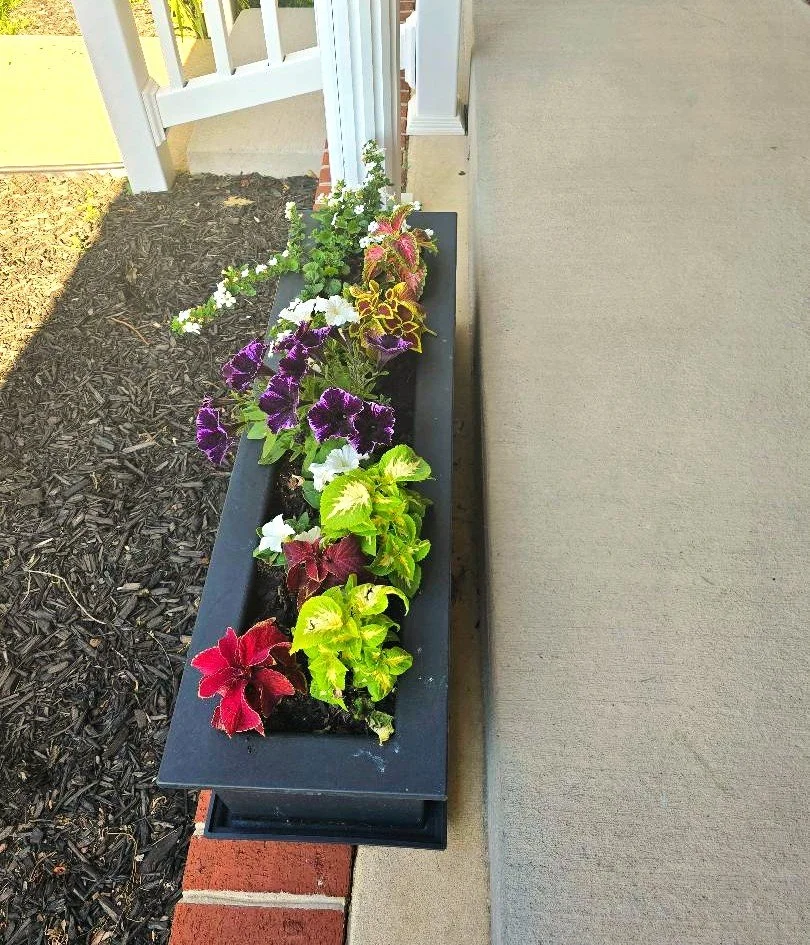
I finished the last planter late in the afternoon on a gorgeous April day, stepped back to the edge of my lawn, and just looked at the front of the house for a long moment. The wreath on the black door. Five identical planters bursting with deep purples, burgundy, chartreuse and white. Three lush ferns cascading from above. The white porch columns framing everything. The red brick as the backdrop for all of it.
It looked like home. It looked like me. It looked — if I do say so myself — like something out of a magazine.
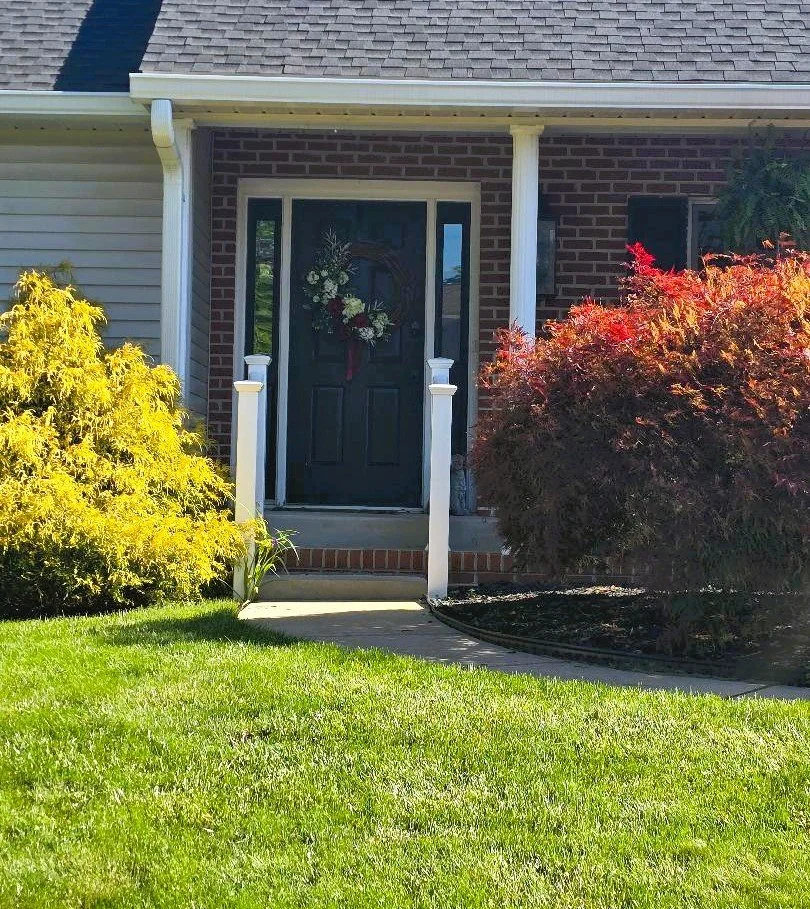
And all it took was letting a handmade wreath tell me what colors to plant. Sometimes the best design plan is already hanging on your front door.
✦ ✦ ✦
Until next time — keep planting, keep growing, and always let your garden tell its own story.
Summer Update: These walkway planters have completely exploded since I first put them together this spring, and these photos are proof. The coleus varieties — deep burgundy edged in gold, that gorgeous two-tone chartreuse, all of it — have filled in and cascaded right over the brick edging onto the walkway. The white petunias have gone wild too, tumbling down alongside a surprise burst of deep purple ones I tucked in along the way. Every single morning I walk out this front door and just stop to take it in. This is exactly the wild, overflowing look I was hoping for when I planted these back in spring — and honestly, it just keeps getting better.
— Blooms & Dwell