When the Garden Comes Inside: A Rainy Day Plant Spa
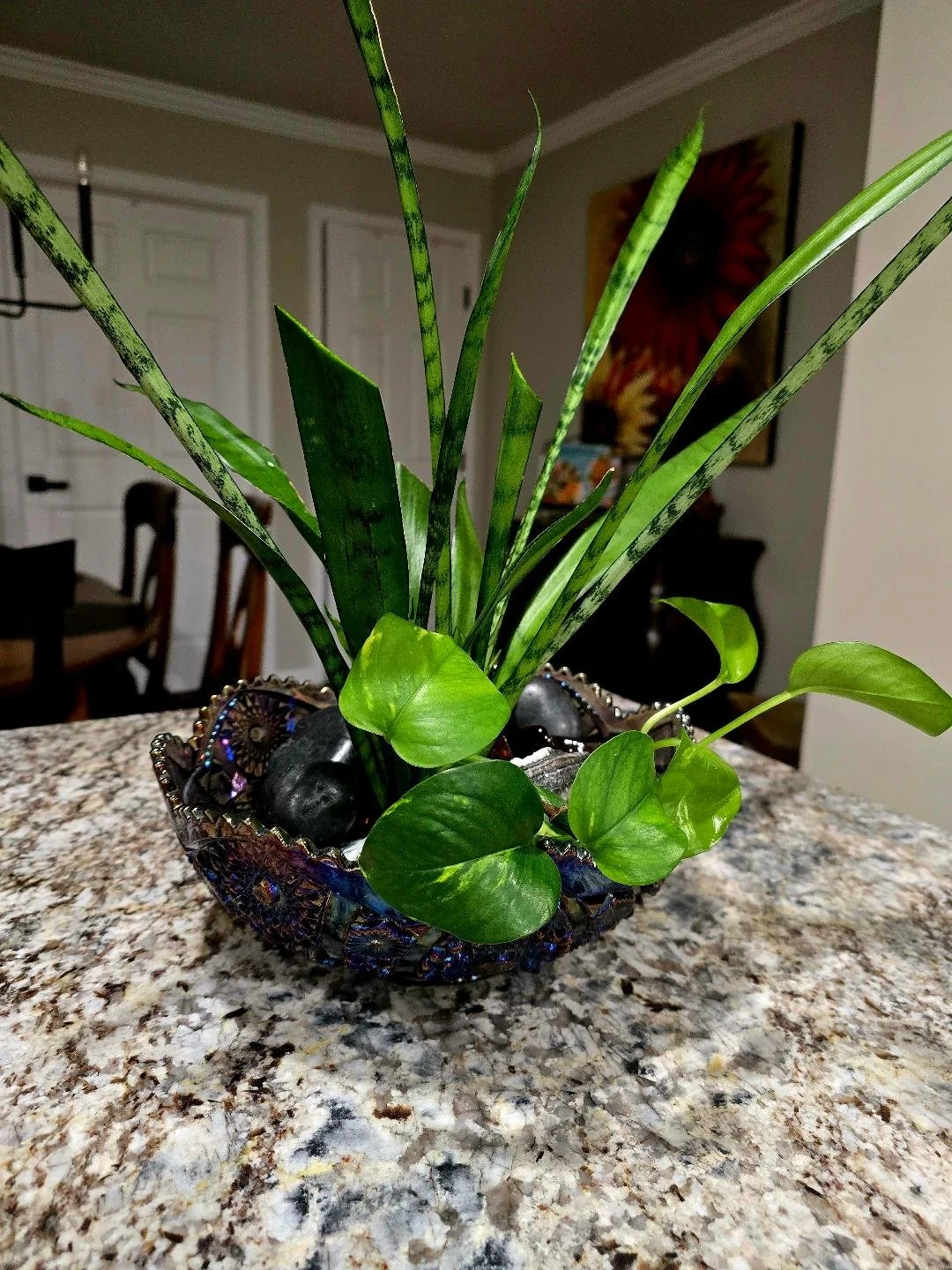
Some of my favorite gardening days aren't spent outside at all.
Today the rain came down steady over York, and I did what any self-respecting plant obsessed retired woman does on a Thursday — I moved my houseplants outside to soak up the soft rain, then spent the better part of the day giving my entire water garden collection what I call their monthly spa day.
If you've never tried growing plants in water — no soil, just water and stones — you are missing one of the most satisfying and beautiful things you can do with houseplants. And on a rainy day when you can't get into the garden? It's the perfect project.
The Rainy Day Ritual
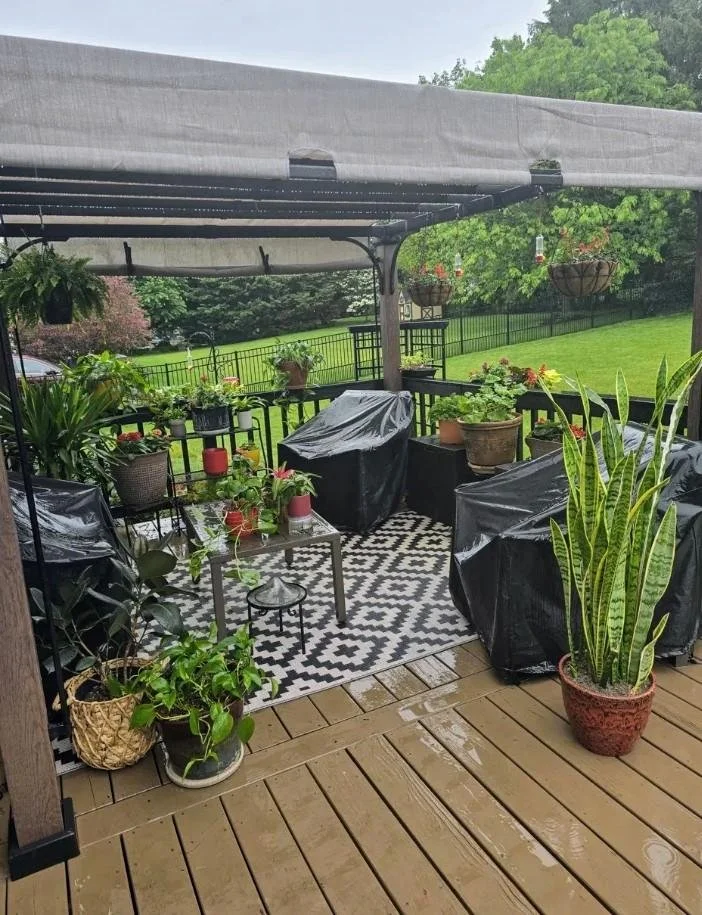
First things first — before spa day even begins, I move any houseplants that can tolerate it outside under the covered porch or directly into the rain. There is something a plant gets from natural rain that no watering can replicate. The soft water, the humidity, the gentle movement of being touched by weather. My snake plants, pothos, and anthuriums always come back inside looking like they've been to a resort.
While they're outside getting their rain shower, I get to work indoors.
What Is a Water Garden?
I grow seven plants permanently in water — no soil at all. They live in vessels filled with river stones and fresh water, roots dangling in the water, stems reaching up into the air. The results are stunning, and the maintenance is actually simpler than you'd think once you get the routine down.
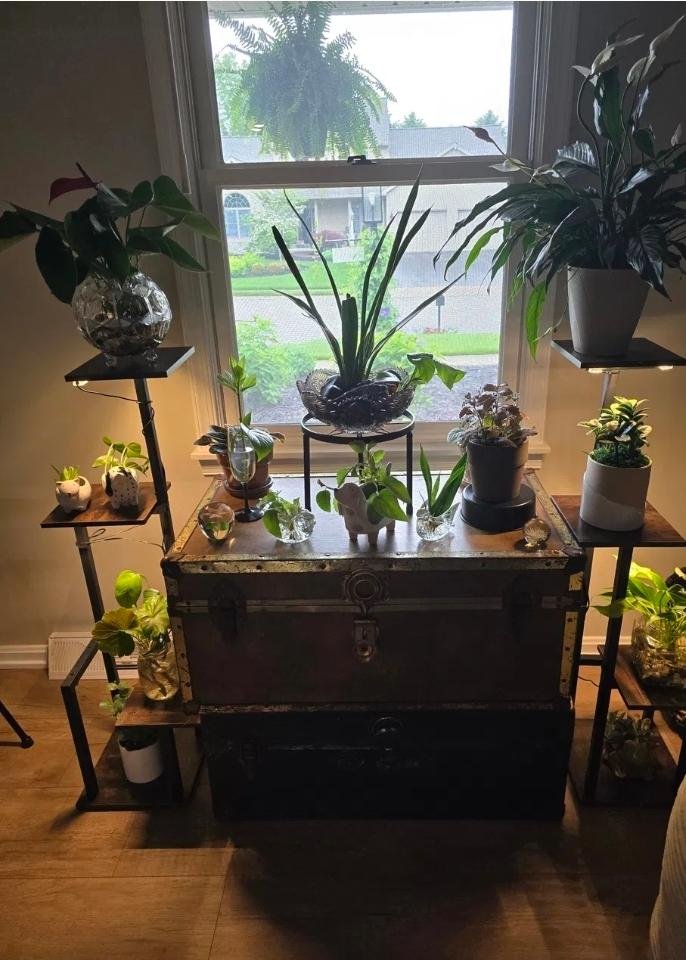
My water garden collection lives in some of my most treasured vessels:
- My mother's antique carnival glass bowl — iridescent purple, breathtaking, irreplaceable 💜
- A cut crystal globe
- A pressed glass vintage jar I found at a thrift store for almost nothing
- A ribbed glass vessel
- A stemless wine glass
- Two little ceramic duck planters
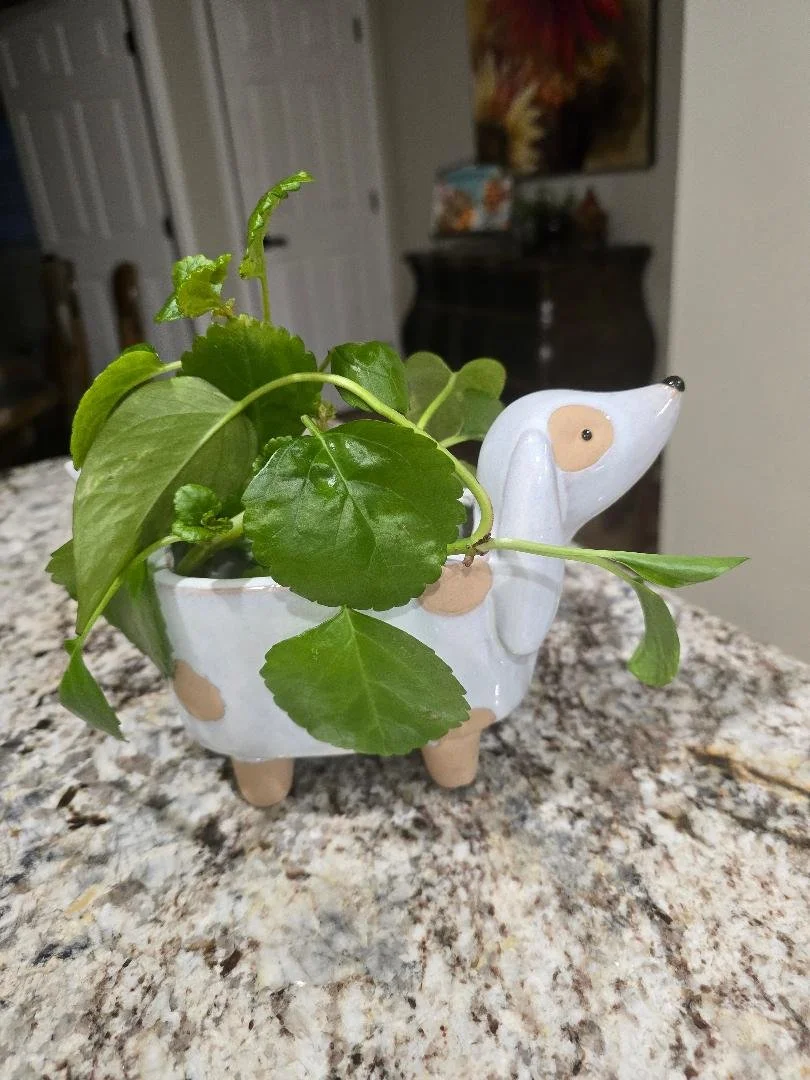
- And Biscuit — a round ceramic puppy planter who holds a tiny snake plant and looks very serious about it 🐶
My Complete Water Plant Spa Method
Here's exactly what I do every month — or every two weeks for my more sensitive anthuriums:
**The night before:
** Boil a full pitcher of water and let it cool overnight. Tap water contains chlorine and fluoride that stress water plant roots. Boiled, cooled water makes a real difference.
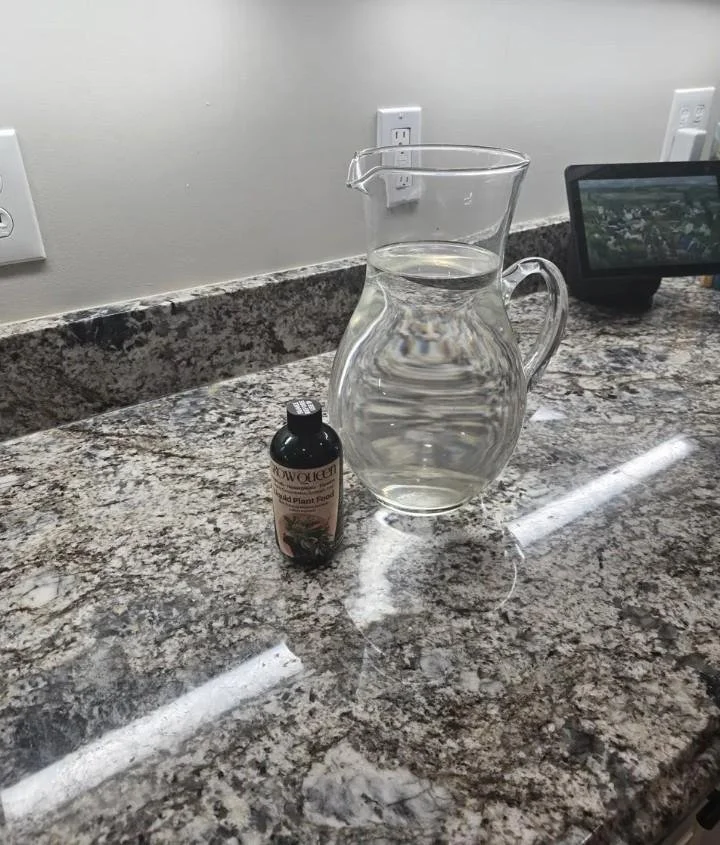
**Step 1 — Wash your scissors first.
** Before touching a single plant, I wash and dry my scissors. Dirty scissors introduce bacteria directly to cut roots. This one habit has saved me so much heartbreak.
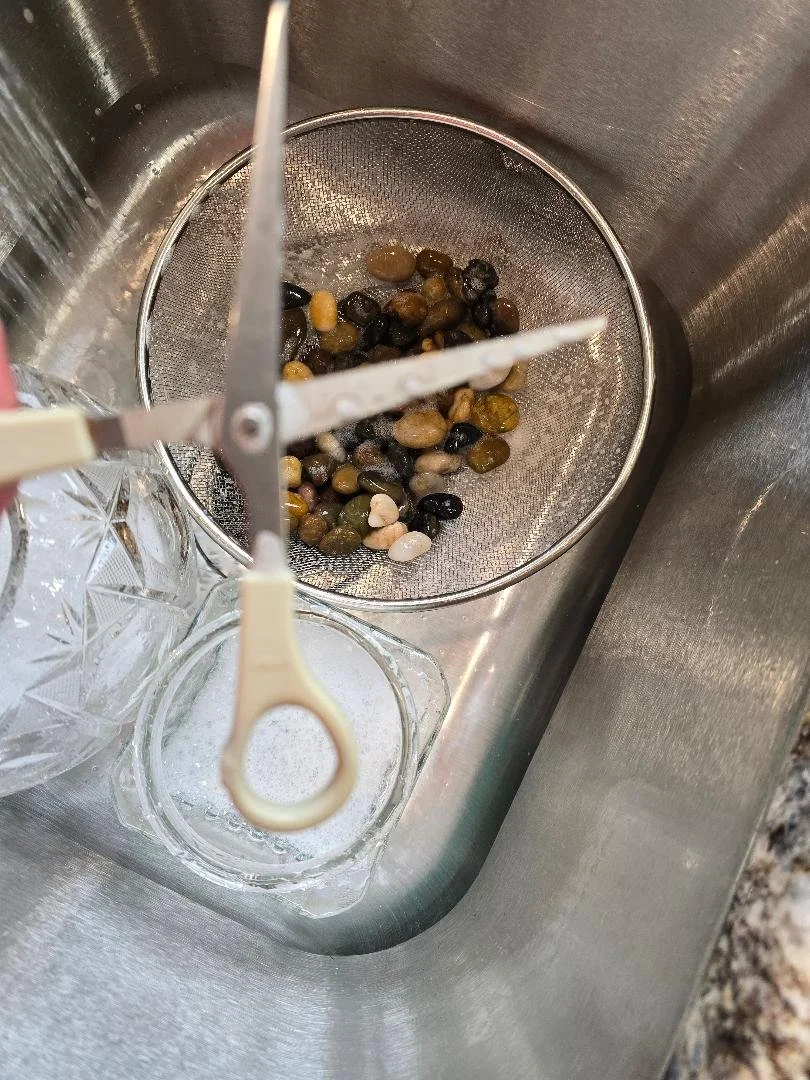
**Step 2 — Remove and rinse the plants.
** I take each plant out of its vessel and rinse the roots and foliage under a gentle stream of water, spraying off any dust or debris from the leaves.
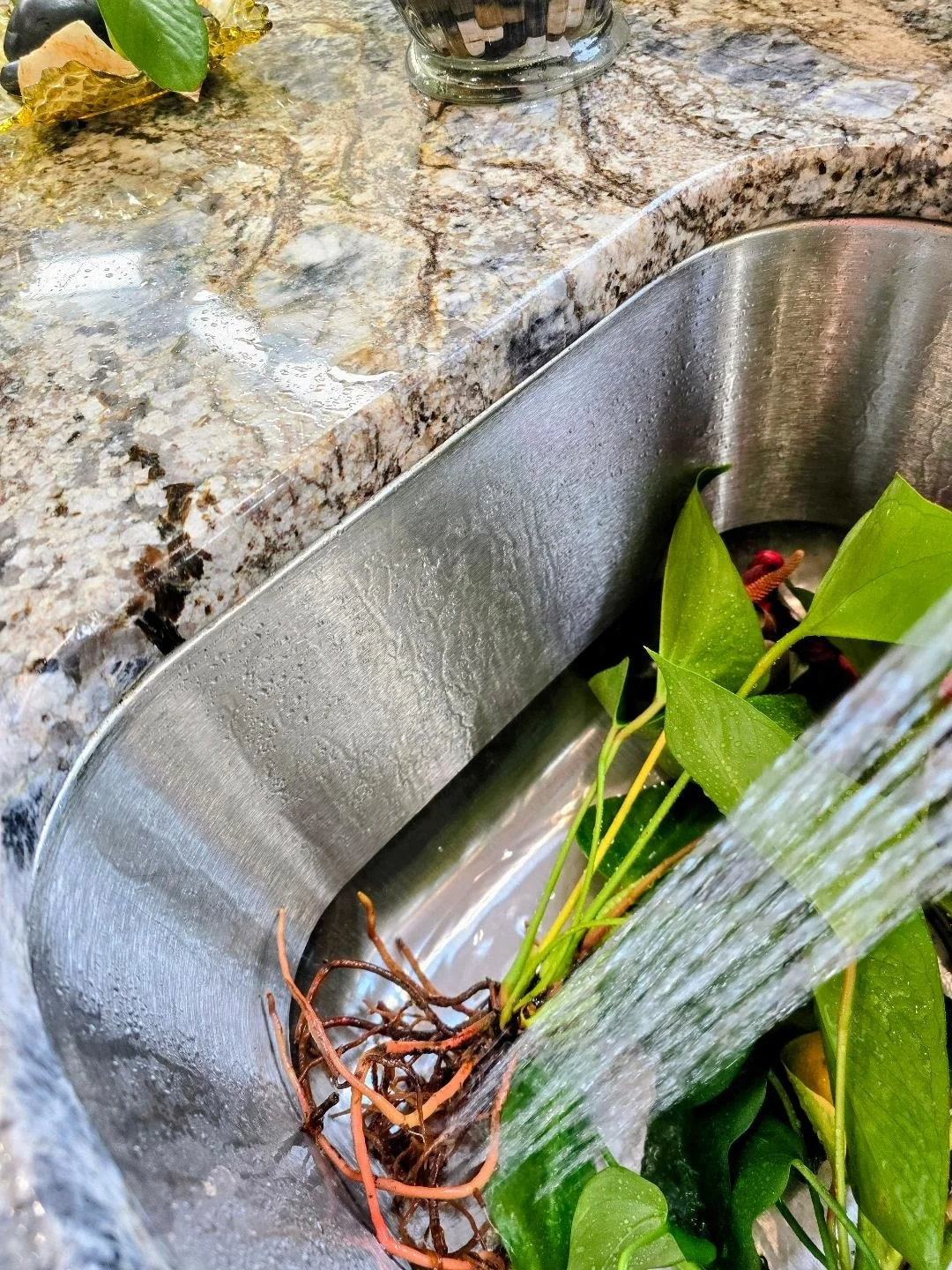
**Step 3 — Trim the roots.
** This is the most important step. I look for roots that are dark, mushy, or slimy and cut them away cleanly. Healthy water roots are firm — reddish-pink on pothos, bright orange-copper on snake plants, pale cream on anthuriums. If it's soft and dark, off it goes.
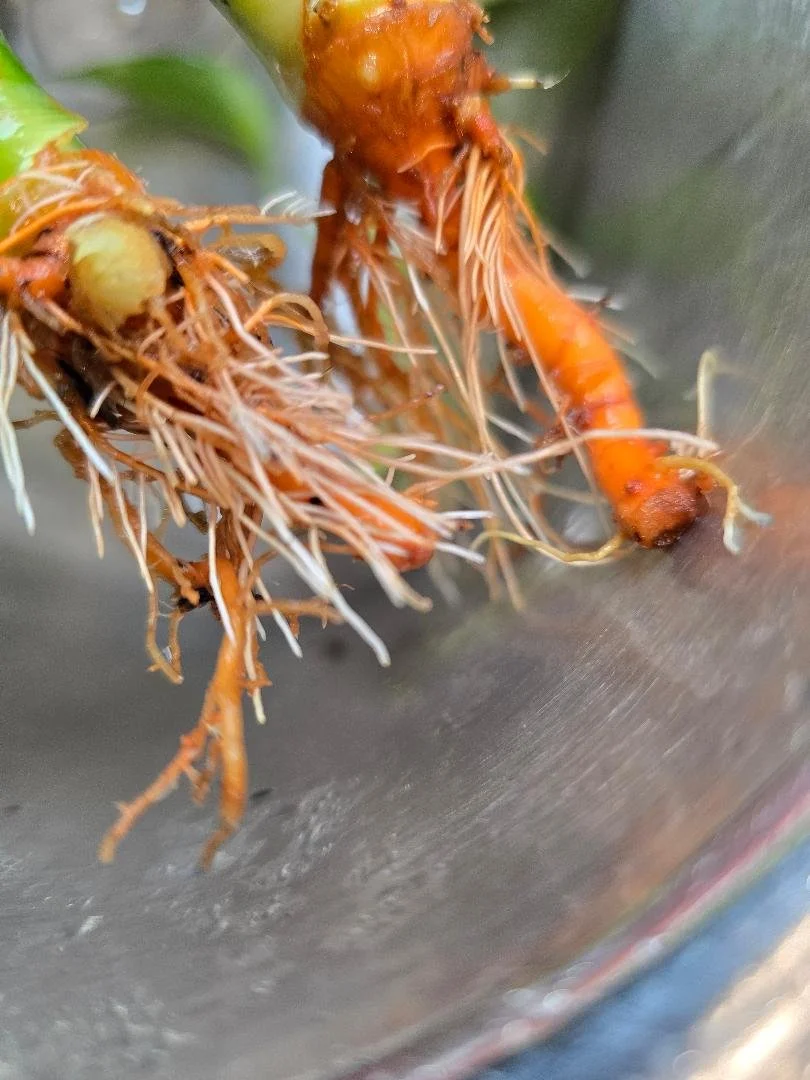
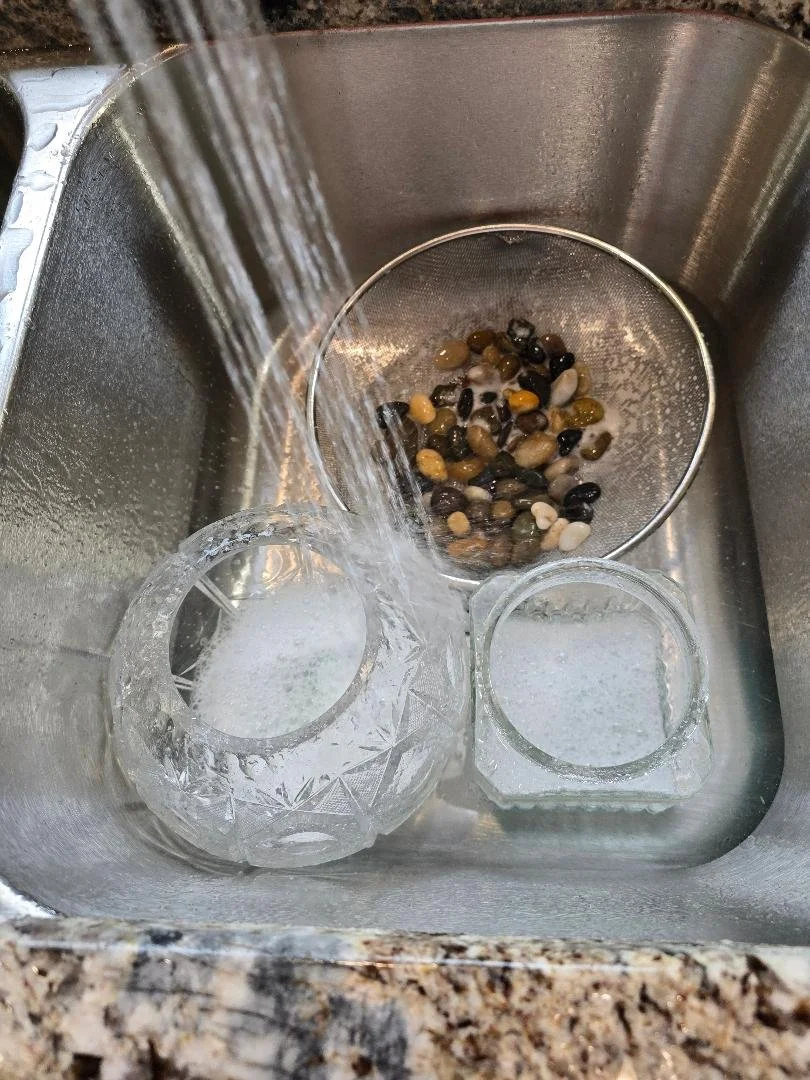
**Step 4 — Wash rocks in a mesh strainer.
** I dump all the river stones into a fine mesh strainer and wash them thoroughly with dish soap under running water. The strainer keeps every single stone from going down the drain. Simple, but genius if I do say so myself.
**Step 5 — Wash the vessels with soap.
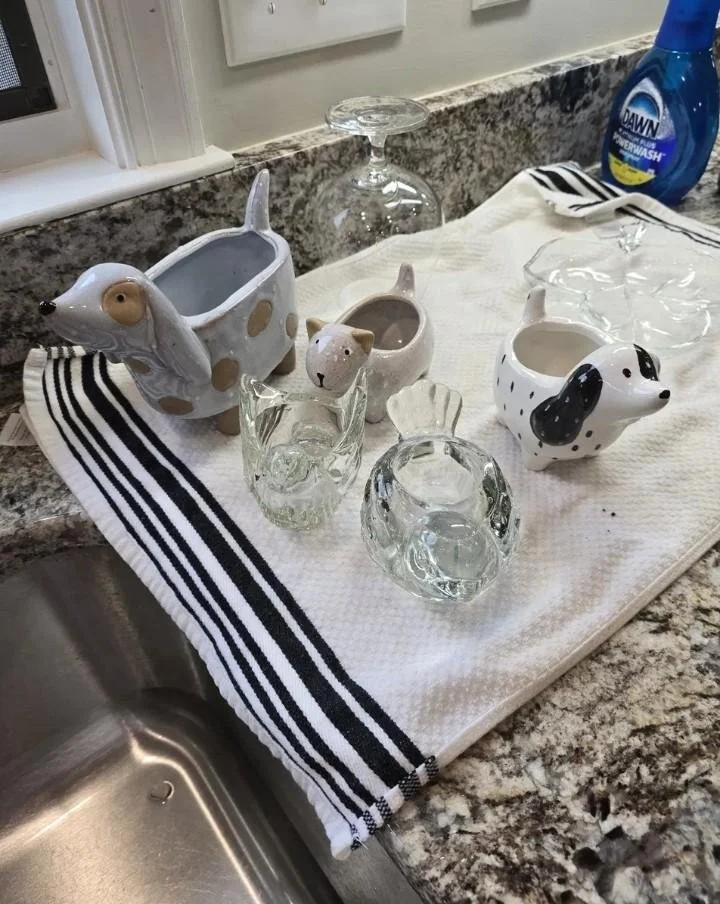
** Every vessel gets a good scrub inside and out. Those gorgeous glass pieces deserve to sparkle.
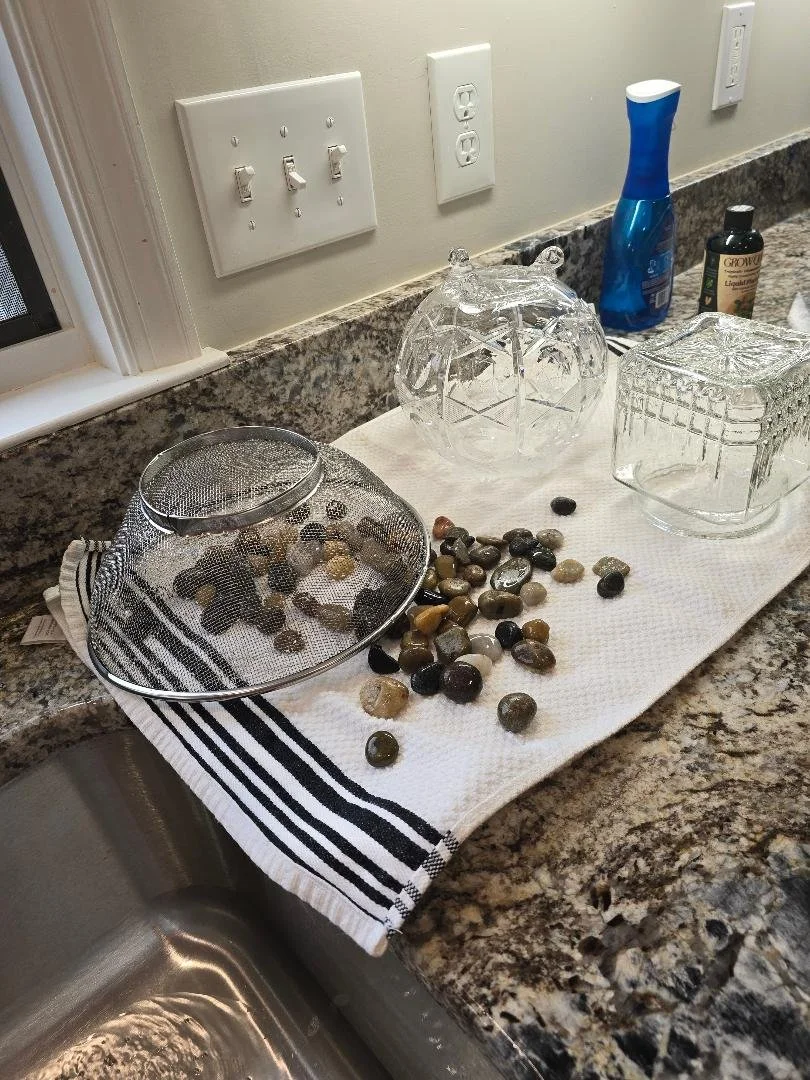
**Step 6 — Let everything drain and dry.
** I lay everything out on a clean black and white striped kitchen towel to drain while I finish trimming roots.
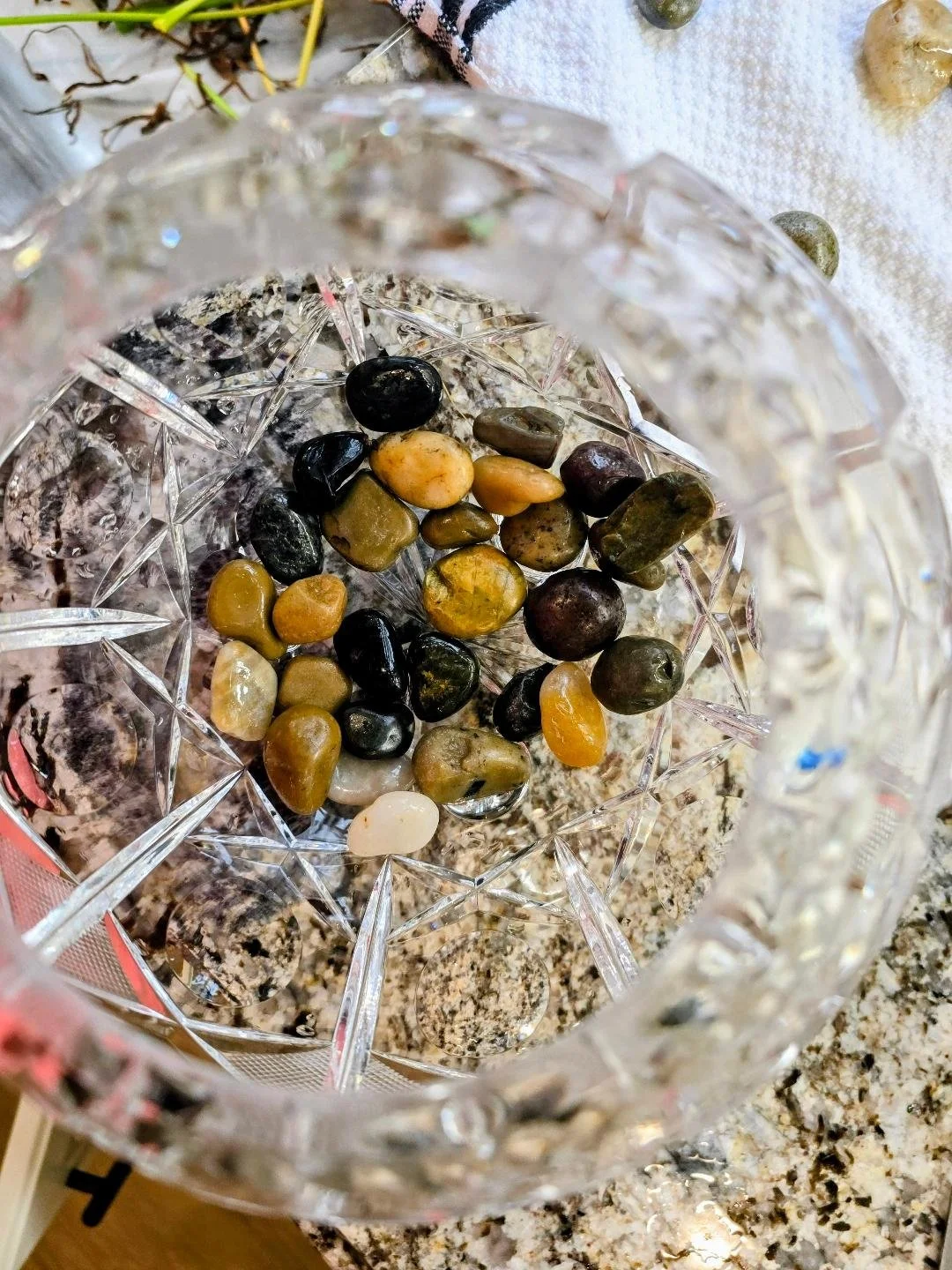
**Step 7 — Reassemble with fresh water.
** Rocks in first. Plant nestled into rocks. More rocks poured gently over and around the roots to stabilize. Then fresh boiled water added carefully — **roots only, never over the green stems.** Stems touching water will rot. Roots only.
**Step 8 — Fertilize.
** I add a few drops of GrowQueen liquid plant food to each vessel. Just a little — less is more for water plants.
That's it. The whole process takes a few hours when you have seven plants plus all their vessels and rocks, but there is something deeply satisfying about it. By the end every plant is clean, every vessel is sparkling, the water is fresh, and the whole display looks like something from a boutique plant shop.
## The Water Level Rule Nobody Tells
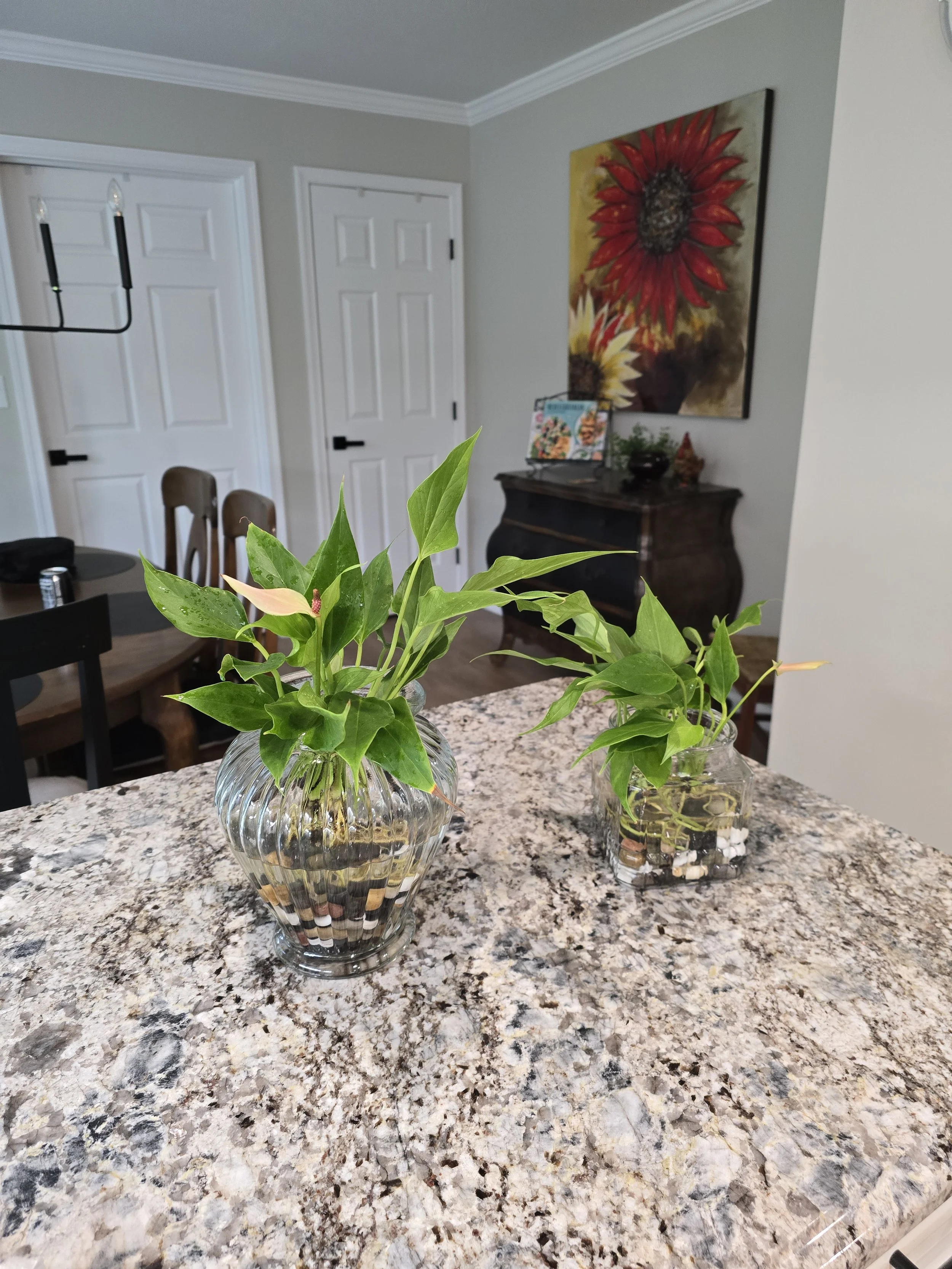
Here's the single most important thing I've learned about water gardening: **only the roots touch the water. Never the stems.**
Stems submerged in water will rot, no matter how healthy the plant otherwise is. I keep my water level low — just enough to cover the root tips — and my plants stay healthy and strong. This is especially important for anthuriums, which are naturally epiphytic plants (they grow on other plants in the wild, not in water at all). The lower the water level, the happier they are.
## Today's Discovery
Every spa day teaches me something new.
Today I noticed my anthurium that accidentally ran dry when a butterfly bush cutting stole all the water actually had *better* root health than my other anthuriums. Sometimes a little adversity makes a plant stronger. Now I keep all my anthuriums at a lower water level intentionally.
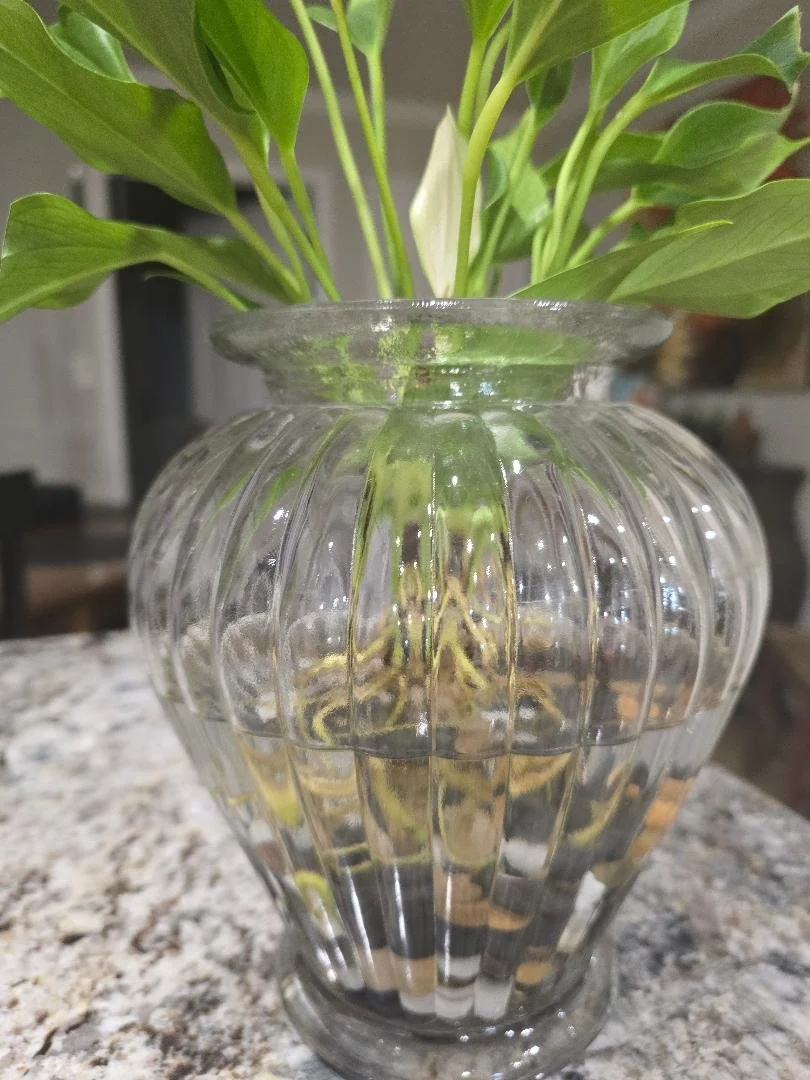
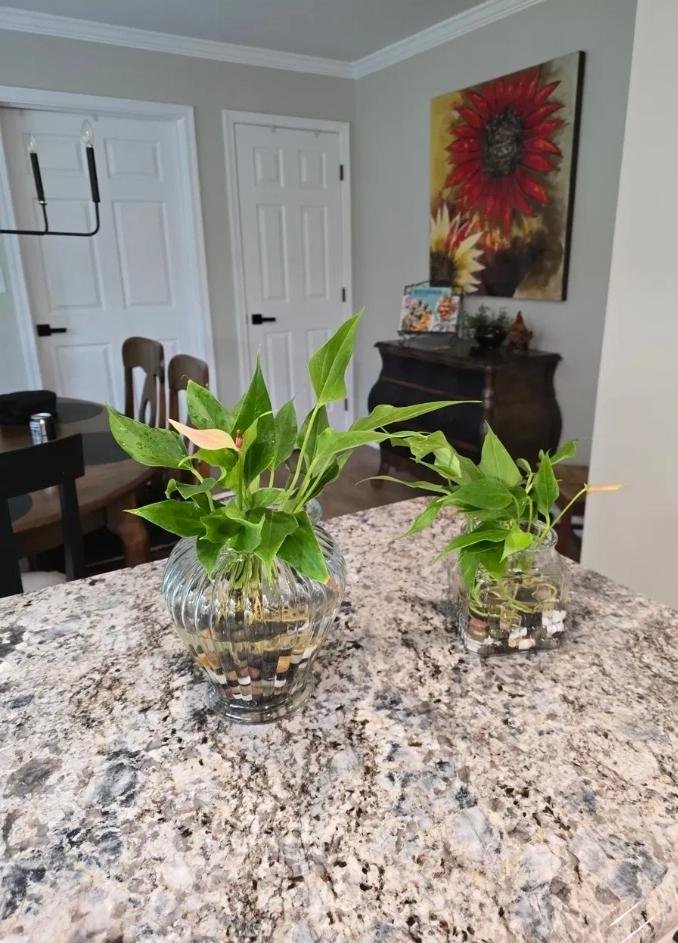
I also divided a very crowded anthurium into two plants today — she was getting stressed from competition for nutrients. Now she lives in two beautiful vessels and both halves are already looking happier.
And I discovered that my little English ivy cutting — Ivy Mae, rescued from a broken stem at a thrift store and living in a ceramic dachshund planter on my counter — has developed the most magnificent root system. She came to me as a stranger's accident and she has absolutely thrived. 🌿
## Why I Love This So Much
There's something about having living things growing in beautiful glass on your counters and windowsills that makes a home feel genuinely alive. Not just decorated. Alive.
On a rainy day when I can't be in the garden, I can tend to this indoor garden. I can get my hands on plants, check on roots, clean vessels, arrange and rearrange. The same instinct that takes me outside to deadhead flowers and check on Peggy Martin's cuttings in the basement — it works just as well at the kitchen sink on a Thursday afternoon in the rain.
The garden comes inside. And honestly? Sometimes that's exactly where I need it. 💚
What plants are you growing in water? I'd love to know — drop a comment below or find me on Facebook. And if you try the spa day method, tag me so I can see your beautiful vessels!*
Regina, **bloomsanddwell.com** · York, Pennsylvania · Zone 7a