Building a Hummingbird Haven: How Love for Alabama Came North With Me.
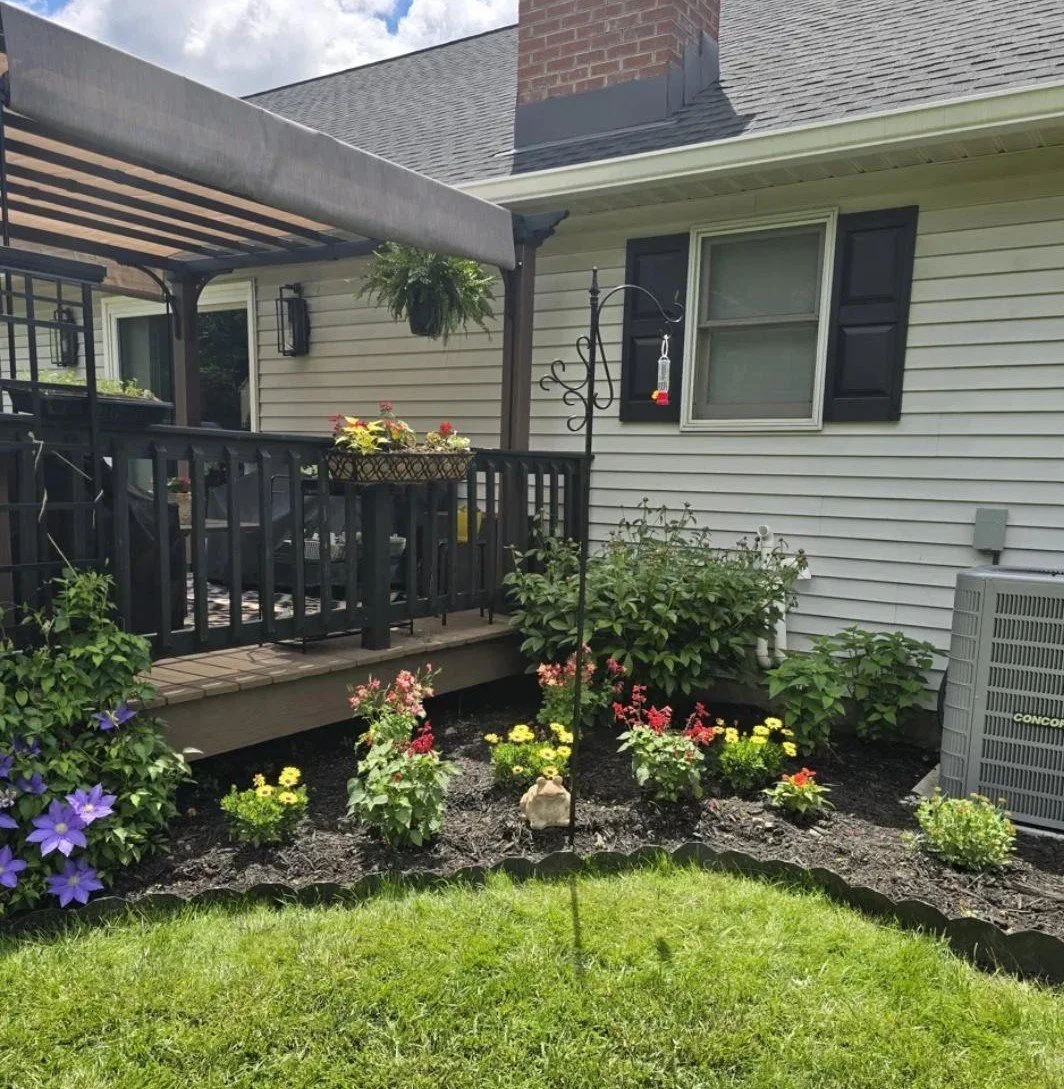
Hummingbird Haven
Hummingbird Haven
Welcome to Bloom & Dwell — a little corner of the internet where gardens grow, wildlife is always welcome, and home is wherever your roots take hold.
When we packed up our Alabama life and moved north to York, Pennsylvania, I didn't just leave behind a house. I left behind a garden that had taken years to build — a garden that hummed and fluttered and buzzed from spring through fall. A garden that my husband would sit and watch for hours, binoculars in hand, perfectly content.
Getting him to fall in love with a new yard was going to take some doing.
So I got to work.
WHY HUMMINGBIRDS?
If you've never watched a ruby-throated hummingbird hover at a feeder — wings a blur, jewel-green back catching the light — you're missing one of nature's genuine miracles. In Alabama, they were faithful summer visitors. I wanted to make sure they found us here in Pennsylvania too.
But I didn't just want a feeder on a shepherd's hook. I wanted a haven — a dedicated space so full of the right plants that the hummingbirds wouldn't just visit, they'd linger.
FINDING THE RIGHT SPOT
The hummingbird haven lives in the west corner of our yard — a triangular bed that catches afternoon sun and is sheltered enough to feel intentional. Hummingbirds prefer a spot where they can dart in, feed, and retreat to a nearby perch. The corner location gives them exactly that sense of security.
If you're planning your own haven, look for a spot that gets at least 4 to 6 hours of sun, has some vertical interest like a fence, trellis, or tall plants for perching, and is visible from a window — because half the joy is watching from inside.
THE PLANTS THAT MAKE IT WORK
Hummingbirds are drawn to tubular flowers, especially in shades of red and orange. Here's what's going into my west corner bed:
Bee Balm (Monarda) — A cottage garden staple and an absolute hummingbird magnet. It spreads enthusiastically, which I consider a feature rather than a flaw.
Cardinal Flower (Lobelia cardinalis) — Possibly the single best hummingbird plant you can grow. The tall spikes of fire-engine red blooms are irresistible to them. Mine came as special mail-order plants and I have been hovering over them like a nervous mother.
Crocosmia Lucifer — Arching stems of bright red-orange blooms that look almost tropical. Hummingbirds love them and they add incredible drama to the bed.
Cardinal Climber Vine — A fast-growing annual vine with small star-shaped red blooms. I'm training it to climb at the back of the bed for vertical interest.
Salvia — Added this season for extended late-summer bloom. More flowers, longer season, happier hummingbirds.
And the crown jewel, still growing under lights in my basement — Trump, my trumpet vine. Yes, I named him. He arrived as a mail-order baby and has already grown over a foot tall. Trumpet vine is the ultimate hummingbird plant: big, bold, orange, unstoppable. He'll eventually climb and anchor the whole haven. We're just getting acquainted for now.
A WORD ABOUT FEEDERS
Even with the best plant selection, a good feeder gives hummingbirds a reliable energy source while your garden gets established. I use a simple solution of one part white granulated sugar to four parts water — boiled, cooled, and changed every few days in warm weather. No red dye needed; the feeder itself provides the color cue.
Hang it near your plantings but not so close that territorial males can guard both at once. Hummingbirds are feisty little things.
THE MEMORY THAT STARTED IT ALL
I need to tell you why hummingbirds mean so much to me, because it goes deeper than just a pretty garden.
When my mother passed away, she was at home — the way she would have wanted. Family had come from everywhere to be with us, and the house was full in that particular way it gets during the hardest days — people quietly moving through rooms, voices low, grief sitting heavy in the air.
Our back patio in Alabama opened onto a pergola completely covered in Peggy Martin roses — a legendary climbing rose that blooms in cascading clusters of soft pink. And that summer, we had hundreds of hummingbirds. Hundreds. They were everywhere, working every bloom, hovering and darting and going about their small urgent lives completely indifferent to our sorrow.
Family members would drift outside and just sit. Watch. And something about those tiny, tireless birds — so full of life, so impossibly beautiful — brought a quiet peace to an almost unbearable time. We didn't talk about it much. We didn't need to. We just sat together under the roses and let the hummingbirds do what they do.
I have never forgotten that.
So when I say I'm building a hummingbird haven in York, I mean something more than a pretty garden bed. I mean I'm keeping something alive — a feeling, a memory, a connection to my mother and to that pergola and to the grace that showed up exactly when we needed it most.
I'm also rooting a cutting of that very Peggy Martin rose in my basement right now, determined to bring her north with me. When she finally blooms here in Pennsylvania, I'll know my mother made the trip too.
THE BIGGER PICTURE
My husband — a devoted bird watcher who can identify species by wingbeat from across the yard — doesn't ask much of a garden. But he lights up when a hummingbird appears. Building this haven is my love letter to him, and to the Alabama garden we both miss more than we usually admit.
York is home now. But some things — the way bee balm smells, the flash of ruby at the feeder, the particular silence of a garden waiting to be discovered — those travel with you.
I'm just making sure the hummingbirds find us here too.